

Eligibility Criteria
- MBBS Graduates
- Practicing Doctors (MBBS+MD/MS/M.Ch)
- MBBS+MD And DNB Residents
- Undergraduate Medical Students In The Final Year

Dr. Ayush Pandey
MBBS, MD
FIM FRSPH (London) FNIV (Spain), FPC FCCS (USA), FNCC
Fellowship in Nephrology
This Fellowship course in Nephrology provides a foundational understanding of the principles, skills, and best practices essential for healthcare professionals to focus on renal disorders. Using a blended learning approach with case studies and interactive sessions, it provides a clinically relevant understanding to optimize patient outcomes in renal failure, glomerular diseases, and urinary tract infections.
- 12 Months
- Oct 22, 2026
- 14 modules
- 120 CPD Points
- Mode - Hybrid
- Observership - 2 Months
Course Curriculum
1. Foundations of Nephrology
- Basics of nephrology concepts
- Renal anatomy and histology
2. Diagnostics in Nephrology
- Introduction Electrolyte Levels
- Estimated Glomerular Filtration Rate
- Basics of Urinalysis
- Immunohistochemistry
- Assessment of electrolyte disorders (hyponatremia, hyperkalemia)
- Evaluation of acid-base disorders (metabolic acidosis, metabolic alkalosis)
- Urine Cytology
- Voiding cystourethrography (VCUG)
3. Infections of the Urinary tract and Kidney
- Upper Urinary Tract infections
- Fungal infections of Urinary Tract
- Cystitis
- Urethritis
- Catheter-associated UTIs
- UTIs in pregnant women
- UTIs in patients with diabetes or immunosuppression
- Recurrent UTIs
4. Acute Kidney Injury (AKI) and Chronic Kidney Disease (CKD)
- Acute Kidney Injury (AKI)
- Types of Acute Kidney Injury
- Management of Acute Kidney Injury
- Chronic Kidney Disease
- Staging and management of CKD
- Electrolyte Disturbances and Fluid management
5. Interstitial and Vascular Diseases
- Interstitial Nephritis
- Post-streptococcal and Other Bacterial Infection–Related Glomerulonephritis
- Viral Glomerulonephritis
- Vasculitis Diseases of the Kidney
- Hemolytic uremic syndrome (HUS)
- Thrombotic thrombocytopenic purpura (TTP)
- Atypical hemolytic uremic syndrome (aHUS)
- Granulomatosis with polyangiitis (Wegener’s)
- Microscopic polyangiitis
- Polyarteritis nodosa
- Renal Artery Aneurysms
- Immunoglobulin A Nephropathy
- Membranoproliferative Glomerulonephritis
- Nephrotic Syndrome
6. Kidney Disease in Special Populations
- Aging and Renal disease
- Polycystic kidney disease (PKD)
- Congenital anomalies of the kidney and urinary tract (CAKUT)
- Autosomal recessive and dominant disorders (e.g., nephronophthisis, Alport syndrome)
- Diabetic Nephropathy
- Aging and Pregnancy
- Hemolytic uremic syndrome (HUS)
- Henoch-Schönlein purpura nephritis
- Bardet-Biedl syndrome
- Gitelman syndrome
- Alport Syndrome
- Dent disease
- Peritoneal dialysis in children
- Hemodialysis in children
- Kidney transplantation in pediatric patients
- Renal crisis in systemic sclerosis
- HIV-Associated Nephropathy (HIVAN)
- Hepatorenal Syndrome (HRS)
7. Disorders of Electrolyte, water, and Acid-base
- Regulation of Acid-Base Balance
- Metabolic Acidosis and alkalosis
- Respiratory Acidosis and alkalosis
8. Renal Disease in Pregnant Women
- Renal hemodynamics during pregnancy
- Preexisting Kidney Diseases in Pregnancy
- Kidney Diseases in Pregnancy
- Acute kidney injury (AKI) in pregnancy
- Management of renal diseases in pregnant women
9. Nephrotoxicity
- Common Nephrotoxic Agents
- Drugs causing nephrotoxicity
- Management of nephrotoxicity
10. Nutritional Requirements in Renal Disease
- Nutritional screening and assessment
- Rationale For Medical Nutrition Therapy In Kidney Disease
- Nutrient And Fluid Requirements in Kidney
- Disease Diets and Enteral Supplements in Kidney Disease
11. Dialysis and Transplant
- Types of Dialysis
- Assessment and Preparation for Dialysis
- Dialysis Prescription and Treatment
- Pre-transplant evaluation and workup
- Immunosuppression protocols and complications
- Post-transplant care and rejection management
12. Cystic and Tubular Disorders
- Autosomal Dominant Polycystic Kidney Disease and ARPKD
- Alport Syndrome
- Urinary Tract Obstruction and Reflux Nephropathy
- Isolated Renal Tubular Disorders
- Nephrolithiasis
13. Renal Pathology and Research
- Interpretation of renal biopsies
- Renal Cell Carcinoma
- In-depth discussion on ongoing research projects
14. Drugs in Nephrology
Drug Index
Earn Recognized Certifications
Upon successful completion of the course and all required assessments, participants will be awarded professional certificates that are recognized by leading healthcare institutions.
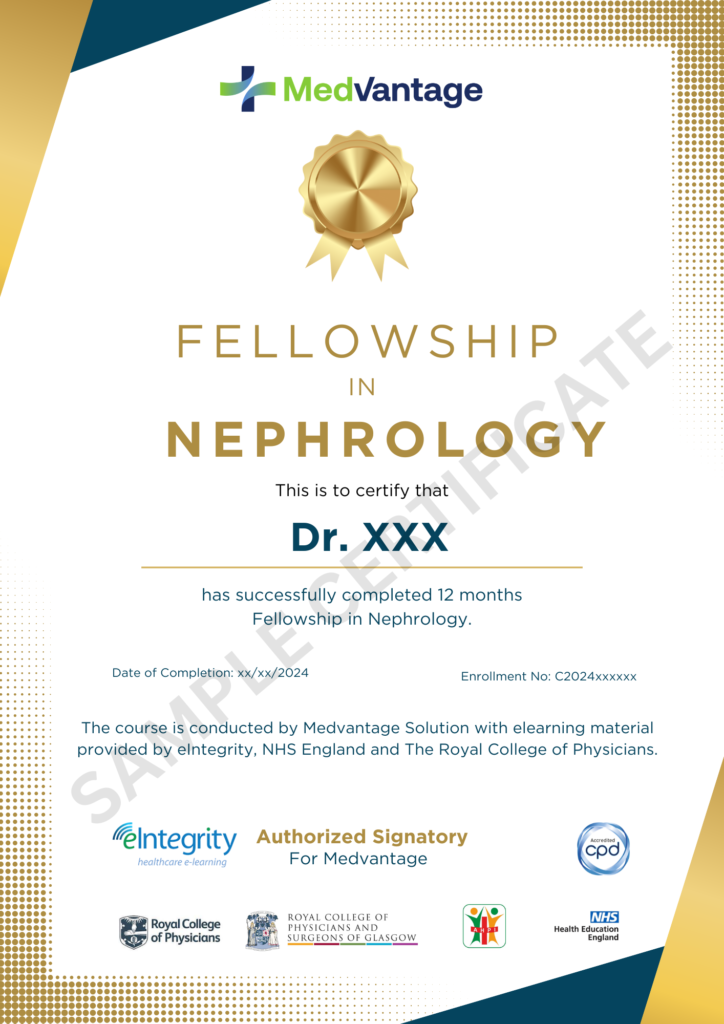
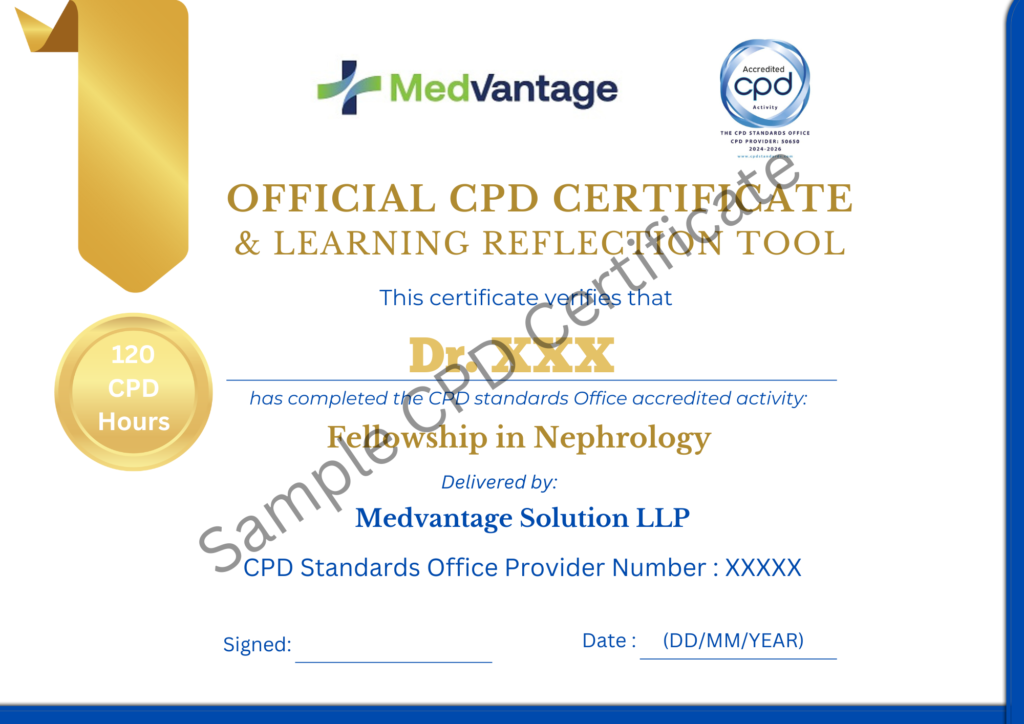
- Earn 120 CPD Points continuing medical education credits
- Digital certification with secure verification
- Share your achievement directly on LinkedIn and other platforms
- Certificate issued by MedVantage Education and recognized industry partners
Frequently Asked Questions
What is the duration of Fellowship in Nephrology by Medvantage
The Fellowship in Nephrology by MedVantage is a 12-month hybrid program designed for working medical professionals. The course includes 14 comprehensive learning modules, 120 CPD points, and 2 month of clinical observership at a reputed hospital, providing a balanced blend of online academic learning and clinical exposure.
What is the eligibility to enroll in the Fellowship in Nephrology?
The Fellowship in Nephrology by Medvantage is open to healthcare professionals at different stages of their medical careers. You are eligible to enroll if you are:
- MBBS Graduate
- Practicing Doctor (MBBS, MD/MS/M.Ch)
- MD or DNB Resident
- Final-Year MBBS Student
Can I persue this course if I am in final year?
YES, this course can be taken up by final year, graduated & post graduate students.
What’s the importance of this course in India?
You will get additional qualification Certificate (United Kingdom) which will benefit you in increasing the number of patients in OPD.
How many CPD hours are accredited on completion of the Fellowship in Nephrology?
Upon the successful completion of the Fellowship in Nephrology, participants are awarded 120 CPD (Continuing Professional Development) hours by the CPD Standards Office, United Kingdom.
Can I pursue the course if I’m working in govt. hospital?
YES, it’s an online course, you can attend classes at any time as per your schedule.
Can I apply if my FMGE is not clear?
YES, you can apply, but by end of the course we need your MCI registration certificate.
In which form, I will get the study material?
In form of modules which includes Live Class with Course Mentor, Recorded Lectures, Webinars and PDFs.
Can international students enroll in the Nephrology?
Yes. International students are welcome to enroll in the Fellowship in Nephrology by Medvantage, subject to meeting the program's eligibility criteria and submission of the required academic and professional documents.