

Eligibility Criteria
- MBBS Graduates
- Practicing Doctors (MBBS+MD/MS/M.Ch)
- MBBS+MD And DNB Residents
- Undergraduate Medical Students In The Final Year

Dr. Ramkesh Singh Parmar
GOLD MEDALIST MBBS, MD (INTERNAL MEDICINE)
SMS MEDICAL COLLEGE JAIPUR DNB, FNB I D, FICP, FISH, FISC, FIDM, FIDF, FELLOW OF AMERICAN COLLEGE OF PHYSICIANS, FELLOW AMERICAN COLLEGE OF CLINICAL ENDOCRINOLOGY, FELLOW ROYAL COLLEGE OF PHYSICIANS OF ENGLAND, PHD, DIABETES, THYROID & ENDOCRINOLOGY
Fellowship in Internal Medicine
The Fellowship course in Internal medicine is structured to equip healthcare practitioners with specialization in the prevention, accurate diagnosis and effective treatment strategies of patients. Through a blend of theoretical understanding and hands-on clinical exposure, participants will delve into internal medicine principles, diagnostic methodologies, therapeutic interventions, and the management of diverse medical conditions prevalent in adult populations. This course is tailored to enhance the medical proficiency of practitioners, enabling them to provide comprehensive care within the realm of internal medicine.
- 12 Months
- Oct 22, 2026
- 33 modules
- 120 CPD Points
- Mode - Hybrid
- Observership - 3 Months
Course Curriculum
1. Basics in Clinical Medicine
Introduction to General Considerations in Clinical Medicine
General Assessment of the Patient
Ethical Principles
Preoperative Evaluation and Perioperative Management
2. Pain & Symptom Assessment
Multidimensional pain assessment
Pharmacological interventions
Non-pharmacological approaches
Management of common symptoms – nausea, dyspnea, fatigue
3. Basics In Patient Assessment
Essentials for Internal Medicine Physician
Emergency Design and Staffing
Wound Assessment and Management
Local and Regional Anesthesia
Point of Care Testing
Essentials of Medicolegal Case Writing
Medicolegal Issues in Emergency
Patient Safety and Quality in Internal Department
4. Critical Care Essentials
Standards of Care during Air Transfer
Standards of Care during Road Transfer
Management of Cardiac Arrest in Adults
Airway Management
Management of Critically Ill Patient in Internal Medicine
Overview of Shock
Sepsis and Septic Shock
Noninvasive Ventilation
Mechanical Ventilation
Oxygen Therapy
5. Respiratory & Pulmonology Disorders
Hemoptysis
Acute Respiratory Failure
Acute Exacerbation of Asthma and Chronic Obstructive Pulmonary Disease
Pneumonia
Pneumothorax and Insertion of Chest Tube
Pulmonary Embolism
Acute Respiratory Failure
Aspiration Pneumonitis
Chronic Obstructive Pulmonary Disease (COPD)
Acute Bronchial Asthma and Management
Pulmonary Hypertension
6. Neurology
Basics of neurology
Neurological History Taking and Physical Examination
Clinical assessment of cranial nerves
Motor and sensory examination
Reflex testing
Fundamentals of Neuroimaging (CT, MRI, etc.)
Electrodiagnostic Studies (EEG, EMG, etc.)
Common Neurological Disorders:
Epilepsy and Seizure Disorders
Stroke and Cerebrovascular Diseases
Movement Disorders (e.g., Parkinson’s disease)
Neurological Emergencies:
Status Epilepticus
Acute Stroke Management
Traumatic Brain Injury
7. Dermatology
Introduction
Skin anatomy and physiology
Dermatological Examination and Diagnostic Techniques:
Skin examination techniques
Deramatoscopy
Skin biopsy and histopathology
Common Dermatological Conditions:
Acne and Rosacea
Eczema and Dermatitis
Psoriasis
Infections (bacterial, viral, fungal)
Skin Cancer and Melanoma:
Skin cancer epidemiology
Basal cell carcinoma, squamous cell carcinoma
Pediatric Dermatology:
Neonatal dermatology
Common skin conditions in children
Dermatopathology:
Histopathological interpretation of skin biopsies
Correlation with clinical findings
Dermatological Emergencies:
Stevens-Johnson syndrome
Toxic epidermal necrolysis
Dermatologic manifestations of systemic diseases
8. Palliative Care
Definition and principles of palliative care
Communication Skills in Palliative Care:
Breaking bad news
Advanced communication techniques
Cultural competency and sensitivity
Ethical and Legal Issues in Palliative Care:
End-of-life decision-making
Pain & Symptom Assessment and Management:
Multidimensional pain assessment
Pharmacological interventions
Non-pharmacological approaches
Palliative Care Across the Lifespan:
Pediatric palliative care
Palliative care for young adults
End-of-Life Care:
Approaches to care in the final days and hours
Recognizing imminent death
Care after death
Principles of geriatric care
Demographic trends and the aging population
Geriatric Syndromes:
Falls and gait disorders
Incontinence
Delirium
9. Psychiatry
Introduction
Historical perspectives and evolution of psychiatric practices
Current trends and challenges in mental health
Psychiatric Interview and Mental Status Examination:
Basic communication skills
Establishing rapport with patients
Psychopathology:
Classification of psychiatric disorders (e.g., DSM-5 criteria)
Understanding and recognizing symptoms of major mental disorders
Differential diagnosis
Neurodevelopmental Disorders:
Autism spectrum disorders
Attention-deficit/hyperactivity disorder (ADHD)
Mood Disorders:
Major depressive disorder
Bipolar disorder
Anxiety Disorders:
Generalized anxiety disorder
Psychotic Disorders:
Schizophrenia
Personality Disorders:
Borderline personality disorder
Narcissistic personality disorder
Antisocial personality disorder
Sleep Disorders:
Insomnia
Substance Use Disorders:
Alcohol use disorder
Substance abuse and dependence
Psychotherapy and Counseling:
Overview of various psychotherapeutic modalities
cognitive-behavioral therapy
Ethics in Psychiatry:
Ethical considerations in psychiatric practice
Confidentiality and informed consent
10. Critical Care and Emergency Medicine
Overview of Critical Care Medicine
Historical Perspective and Evolution
Role of Intensivists and Emergency Medicine Physicians
Ethical Considerations in Critical Care
Monitoring Patients with Critical Illness:
Hemodynamic Monitoring
Respiratory Monitoring
Sepsis And Shock Emergencies:
Sepsis and Septic Shock
Etiology & Pathophysiology
Symptoms and Signs
Diagnosis &Treatment
Prognosis
Management of Organ Failure in Critical Illness:
Renal Failure and Renal Replacement Therapy
Hepatic Failure and Supportive Care
Respiratory Failure and its Management
11. Toxicology
Overview of Toxicology
Approach to the Poisoned Patient
Antidotes Commonly Used in Overdose
Treatment of Hypotension Associated with Drug Poisoning
Carbon Monoxide Poisoning
Illicit Drugs and Controlled Substances of Abuse
Alcohol Withdrawal
Arsenic Poisoning
Cyanide Poisoning
Organophosphate and Organocarbomate Poisoning – Management
Specific Toxicities: Acetaminophen, Alcohol, Amphetamine, Arsenic, Benzodiazepine, Cocaine, Cyanide, etc.
Withdrawal Syndromes
Management of Poisoning and Overdose
Environmental Emergencies:
Burns
Emergency Department – Anaphylaxis
Emergency Department – Hymenoptera Bites & Stings
Heat Stroke & Hyperthermia
12. Clinical Genetics
Introduction
Definition of Clinical Genetics
Historical Developments in Genetics
Ethical and Legal Considerations in Genetic Medicine
Genetic Counseling and Informed Consent
Principles of Human Genetics:
Mendelian Inheritance
Chromosomal Disorders
Molecular Genetics:
DNA Structure and Replication
Gene Expression and Regulation
Genetic Testing and Diagnostics:
Laboratory Techniques in Genetics
Cytogenetic Testing
Pediatric Genetics:
Inborn Errors of Metabolism
Genetic Disorders in Childhood
13. Medical Oncology
Introduction
Historical Perspectives and Advances in Cancer Treatment
Ethical and Psychosocial Aspects of Oncology
Principles of Cancer Biology:
Molecular Basis of Cancer
Cell Cycle Regulation
Cancer Diagnosis and Staging:
Imaging Modalities in Oncology
Pathology and Histopathology
Principles of Medical Oncology Treatment:
Surgery, Radiation, and Systemic Therapies
Survivorship and Late Effects of Cancer Treatment:
Long-Term Follow-Up Care
Monitoring for Late Effects
Emerging Technologies and Innovations:
Liquid Biopsy and Circulating Tumor DNA
14. Radio Diagnosis
Radiological Physics and Technology
Basics of X-ray Physics
Imaging Anatomy and Physiology:
Anatomy Relevant to Radiodiagnosis
Radiographic Techniques:
Conventional Radiography
Fluoroscopy
15. Nuclear Medicine
Principles of Nuclear Medicine
Historical Perspectives and Advances in Nuclear Medicine
Ethical and Legal Considerations in Nuclear Medicine
Radio pharmacy and Radiopharmaceuticals:
Production of Radiopharmaceuticals
Radiation Physics and Safety:
Basics of Radiation Physics
Radiation Protection and Safety Measures
Nuclear Medicine Imaging Techniques:
Planar Imaging
Thyroid Imaging
Parathyroid Imaging
16. Regenerative Medicine
Introduction to Regenerative Medicine
Definition and Principles of Regenerative Medicine
Historical Development and Milestones
Ethical and Regulatory Considerations
Basic Concepts in Stem Cell Biology:
Overview of Stem Cells
Types of Stem Cells (Embryonic, Adult, Induced Pluripotent Stem Cells)
Stem Cell Isolation and Culture Techniques:
Isolation of Stem Cells from Different Sources
In Vitro Culture and Expansion of Stem Cells
Regenerative Medicine Applications:
Regeneration of Musculoskeletal Tissues (Bone, Cartilage, Muscle)
Cardiovascular Regeneration
Regenerative Medicine in Chronic Diseases:
Diabetes and Pancreatic Regeneration
Liver Regeneration
17. Basic Life Support (BLS)
Introduction to Basic Life Support
Importance of BLS in Emergency Situations
Chain of Survival
Legal and Ethical Considerations
Recognition of Cardiac Arrest:
Signs of Cardiac Arrest
Basics of BLS:
Principles of Chest Compressions
Techniques for Adult, Child, and Infant Chest Compressions
Compression Depth and Rate
Cardiopulmonary Resuscitation (CPR) Techniques:
Integration of Chest Compressions and Ventilation
18. Advanced Cardiac Life Support (ACLS)
Advanced Cardiac Life Support (ACLS)
19. Neurology
Basics of neurology
Neurological History Taking and Physical Examination
Clinical assessment of cranial nerves
Motor and sensory examination
Reflex testing
Coordination and gait assessment
Localization of Lesions in the Nervous System
Fundamentals of Neuroimaging (CT, MRI, etc.)
Electrodiagnostic Studies (EEG, EMG, etc.)
Common Neurological Disorders:
Epilepsy and Seizure Disorders
Stroke and Cerebrovascular Diseases
Movement Disorders (e.g., Parkinson’s disease)
Neurodegenerative Disorders (e.g., Alzheimer’s disease)
Headache Disorders (e.g. Dementia)
Neuromuscular Disorders
Peripheral Nerve Disorders
Neurological Emergencies:
Status Epilepticus
Acute Stroke Management
Traumatic Brain Injury
Trigeminal Neuralgia
Neurological Procedures
Lumbar Puncture
Nerve Conduction Studies and Electromyography
Botulinum Toxin Injections
Deep Brain Stimulation
20. Dermatology
Introduction
Skin anatomy and physiology
Dermatological immunology
Pharmacology in dermatology
Dermatological Examination and Diagnostic Techniques:
Skin examination techniques
Deramatoscopy
Skin biopsy and histopathology
Common Dermatological Conditions:
Acne and Rosacea
Eczema and Dermatitis
Psoriasis
Infections (bacterial, viral, fungal)
Urticaria and Angioedema
Disorders of Pigmentation
Hair and Nail Disorders
Skin Cancer and Melanoma:
Skin cancer epidemiology
Basal cell carcinoma, squamous cell carcinoma
Melanoma diagnosis and management
Pediatric Dermatology:
Neonatal dermatology
Common skin conditions in children
Birthmarks and pediatric tumors
Dermatopathology:
Histopathological interpretation of skin biopsies
Correlation with clinical findings
Dermatological Surgery:
Excisional surgery
Mohs surgery for skin cancer
Cryotherapy and electrosurgery
Dermatological Emergencies:
Stevens-Johnson syndrome
Toxic epidermal necrolysis
Dermatologic manifestations of systemic diseases
Sexually Transmitted Infections (STIs):
Dermatologic manifestations of STIs
Diagnosis and management of STIs
21. Palliative Care
Introduction
Definition and principles of palliative care
Communication Skills in Palliative Care:
Breaking bad news
Advanced communication techniques
Cultural competency and sensitivity
Ethical and Legal Issues in Palliative Care:
End-of-life decision-making
Advance care planning and directives
Ethical dilemmas in palliative care
Pain & Symptom Assessment and Management:
Multidimensional pain assessment
Pharmacological interventions
Non-pharmacological approaches
Management of common symptoms – nausea, dyspnea, fatigue
Gastrointestinal symptom & Management
Respiratory symptom & Management
Palliative Care Across the Lifespan:
Pediatric palliative care
Palliative care for young adults
Geriatric palliative care
End-of-Life Care:
Approaches to care in the final days and hours
Recognizing imminent death
Care after death
22. Geriatric Medicine
Introduction
Definition and scope of geriatric medicine
Principles of geriatric care
Demographic trends and the aging population
Aging Physiology and Pathophysiology:
Normal aging processes
Common age-related changes in organ systems
Pathophysiology of geriatric syndromes
Comprehensive Geriatric Assessment:
Physical assessment in the elderly
Cognitive assessment
Functional assessment –
Instrumental Activities of Daily Living – IADLs
Activities of Daily Living – ADL
Geriatric Syndromes:
Falls and gait disorders
Incontinence
Delirium
Frailty
Polypharmacy
Chronic Diseases in Older Adults:
Cardiovascular diseases in the elderly
Diabetes management in geriatrics
Osteoporosis and musculoskeletal disorders
Neurological disorders
23. Psychiatry
Introduction
Historical perspectives and evolution of psychiatric practices
Current trends and challenges in mental health
Psychiatric Interview and Mental Status Examination:
Basic communication skills
Establishing rapport with patients
Techniques for conducting a comprehensive psychiatric interview
Components of the mental status examination
Psychopathology:
Classification of psychiatric disorders (e.g., DSM-5 criteria)
Understanding and recognizing symptoms of major mental disorders
Differential diagnosis
Neurodevelopmental Disorders:
Autism spectrum disorders
Attention-deficit/hyperactivity disorder (ADHD)
Intellectual disabilities
Mood Disorders:
Major depressive disorder
Bipolar disorder
Anxiety Disorders:
Generalized anxiety disorder
Panic disorder
Phobias and obsessive-compulsive disorder (OCD)
Psychotic Disorders:
Schizophrenia
Schizoaffective disorder
Delusional disorders
Personality Disorders:
Borderline personality disorder
Narcissistic personality disorder
Antisocial personality disorder
Eating Disorders:
Anorexia nervosa
Bulimia nervosa
Binge-eating disorder
Sleep Disorders:
Insomnia
Sleep-related breathing disorders
Parasomnias
Substance Use Disorders:
Alcohol use disorder
Substance abuse and dependence
Dual diagnosis and comorbidity
Psychotherapy and Counseling:
Overview of various psychotherapeutic modalities –
cognitive-behavioral therapy
psychodynamic therapy
Therapeutic techniques and interventions
Ethics in Psychiatry:
Ethical considerations in psychiatric practice
Confidentiality and informed consent
24. Critical Care and Emergency Medicine
Overview of Critical Care Medicine
Historical Perspective and Evolution
Role of Intensivists and Emergency Medicine Physicians
Ethical Considerations in Critical Care
Monitoring Patients with Critical Illness:
Hemodynamic Monitoring
Respiratory Monitoring
Neurologic Monitoring
Renal Monitoring
Metabolic and Nutritional Monitoring
Sepsis And Shock Emergencies
Sepsis and Septic Shock
Etiology & Pathophysiology
Symptoms and Signs
Diagnosis &Treatment
Prognosis
Bacterial Pneumonia & Bacterial Sepsis
Community-Acquired Pneumonia Organism-Specific Therapy
Neonatal Sepsis & Pediatric Sepsis
Peritonitis & Abdominal Sepsis
Systemic Inflammatory Response Syndrome (SIRS)
Treatment of Sepsis and Septic Shock in Children
Hypovolemic Shock & Anaphylactic Shock
Management of Organ Failure in Critical Illness:
Renal Failure and Renal Replacement Therapy
Hepatic Failure and Supportive Care
Neurologic Failure and Brain Protection
Gastrointestinal Failure and Nutritional Support
Respiratory Failure and its Management
25. Toxicology
Overview of Toxicology
Approach to the Poisoned Patient
Antidotes Commonly Used in Overdose
Treatment of Hypotension Associated with Drug Poisoning
Carbon Monoxide Poisoning
Illicit Drugs and Controlled Substances of Abuse
Alcohol Withdrawal
Digitalis Toxicity
Calcium Channel Blocker Toxicity
Acetaminophen Hepatotoxicity
Salicylate Overdose
Tricyclic Antidepressant Overdose
Monoamine Oxidase Inhibitor Overdose
Arsenic Poisoning
Cyanide Poisoning
Iron Poisoning
Lithium Carbonate Overdose
Serum Osmolality
Ethanol Poisoning
Corrosive Poisoning
Ethylene Glycol Poisoning
Organophosphate and Organocarbomate Poisoning – Management
Specific Toxicities: Acetaminophen, Alcohol, Amphetamine, Arsenic, Benzodiazepine, Cocaine, Cyanide, etc.
Withdrawal Syndromes
Management of Poisoning and Overdose
26. Clinical Genetics
Introduction
Definition of Clinical Genetics
Historical Developments in Genetics
Ethical and Legal Considerations in Genetic Medicine
Genetic Counseling and Informed Consent
Principles of Human Genetics:
Mendelian Inheritance
Chromosomal Disorders
Multifactorial Inheritance
Genomic Imprinting
Non-Mendelian Inheritance Patterns
Molecular Genetics:
DNA Structure and Replication
Gene Expression and Regulation
Genetic Variation (mutations, polymorphisms)
Epigenetics and Gene Modification
Genetic Testing and Diagnostics:
Laboratory Techniques in Genetics
Cytogenetic Testing
Molecular Genetic Testing
Next-Generation Sequencing
Bioinformatics in Genetic Testing
Pediatric Genetics:
Inborn Errors of Metabolism
Genetic Disorders in Childhood
Developmental Delay and Intellectual Disabilities
Genetic Syndromes with Dysmorphology
27. Medical oncology
Introduction
Historical Perspectives and Advances in Cancer Treatment
Ethical and Psychosocial Aspects of Oncology
Principles of Cancer Biology:
Molecular Basis of Cancer
Cell Cycle Regulation
Tumor Suppressor Genes and Oncogenes
Apoptosis and Angiogenesis
Cancer Microenvironment
Cancer Diagnosis and Staging:
Imaging Modalities in Oncology
Pathology and Histopathology
Molecular and Genetic Diagnostics
Cancer Staging Systems
Principles of Medical Oncology Treatment:
Surgery, Radiation, and Systemic Therapies
Chemotherapy, Immunotherapy, and Targeted Therapy
Hormonal Therapy in Oncology
Combination Therapies and Treatment Sequencing
Survivorship and Late Effects of Cancer Treatment:
Long-Term Follow-Up Care
Monitoring for Late Effects
Survivorship Care Plans
Emerging Technologies and Innovations:
Liquid Biopsy and Circulating Tumor DNA
Artificial Intelligence in Oncology
Advances in Radiotherapy and Imaging
28. Rheumatology
Overview of Autoimmune Diseases
Diagnosis and Management of Rheumatoid Arthritis
Systemic Lupus Erythematosus: Clinical Challenges
Gout and Hyperuricemia
Osteoarthritis: Evidence-Based Approaches
Spondyloarthritis: An Overview
Connective Tissue Diseases
Vasculitis: Clinical Presentation and Management
Infectious Complications in Rheumatology
The Role of Imaging in Rheumatologic Disorders
Biologics and Disease-Modifying Agents
Rheumatologic Manifestations of Systemic Diseases
Pediatric Rheumatology
Chronic Pain Syndromes in Rheumatology
Nutrition and Lifestyle in Rheumatology
Emerging Therapies in Rheumatology
29. Nephrology and Renal Disease
Basics of Nephrology Concepts
Goodpasture’s disease signs and symptoms
Causes of nocturia
Definitions of chronic kidney disease
Management of chronic kidney disease
Causes of dysuria
Investigation and management of urinary tract infection
Investigation and management of acute kidney injury
Investigation and management of haematuria
30. Infectious Diseases
Management of breathlessness in an HIV positive patient
Signs and symptoms of viral encephalitis
All about HSV encephalitis
Investigation and management of urinary tract infection
Management of the septic patient
Severe malaria
TSS Usual organisms and antibiotic therapy
Differentiation of causes of fever
Investigation and management of sSepsis
31. Endocrinology
Drugs which cause low sodium
Management of low sodium
Clinical manifestations of diabetic autonomic neuropathy
Endocrine causes of fever
Management of thyrotoxicosis including thyroid storm
32. Gastroenterology
Pathophysiology of gastro-oesophageal reflux disease causing cough
Abdominal pain
Investigation and management of diarrhoea
Jaundice in the acute medicine setting
Nausea and vomiting: Investigations and management
Refeeding syndrome
Ulcerative colitis: Investigation and management
Haematemesis and melaena: Causes, risk stratification and management
Investigation and management of dyspepsia
33. Clinical Cardiology
Acute management of accidental hypothermia and its complications
Acute illnesses which can present with syncope
Definition of postural hypotension
Syncope: Guidelines and treatment
Anoxic seizures
ECG Interpretation in the bradycardic patient
Limb pain and swelling
Diagnosis of endocarditis
Differential diagnosis investigation and treatment of chest pain in pregnancy
Cardiovascular adaptations to pregnancy
Causes, investigation and management of valvular disease in pregnancy
Classic ECGs and infarct territories
Different presentations of anginal chest pains
0The ECG in acute pericarditis
Pathophysiology presentations and management of cocaine-related chest pain
Causes of mitral stenosis
Investigation, management and treatment of mitral stenosis
Causes of palpitations – atrial flutter
Characteristics of ventricular tachycardia versus supraventricular tachycardia
Brugada syndrome
Risk of in-stent re-stenosis
Causes of hypertrophic cardiomyopathy
Investigation and management of hypertrophic cardiomyopathy
Pericarditis: Investigation and management
Earn Recognized Certifications
Upon successful completion of the course and all required assessments, participants will be awarded professional certificates that are recognized by leading healthcare institutions.
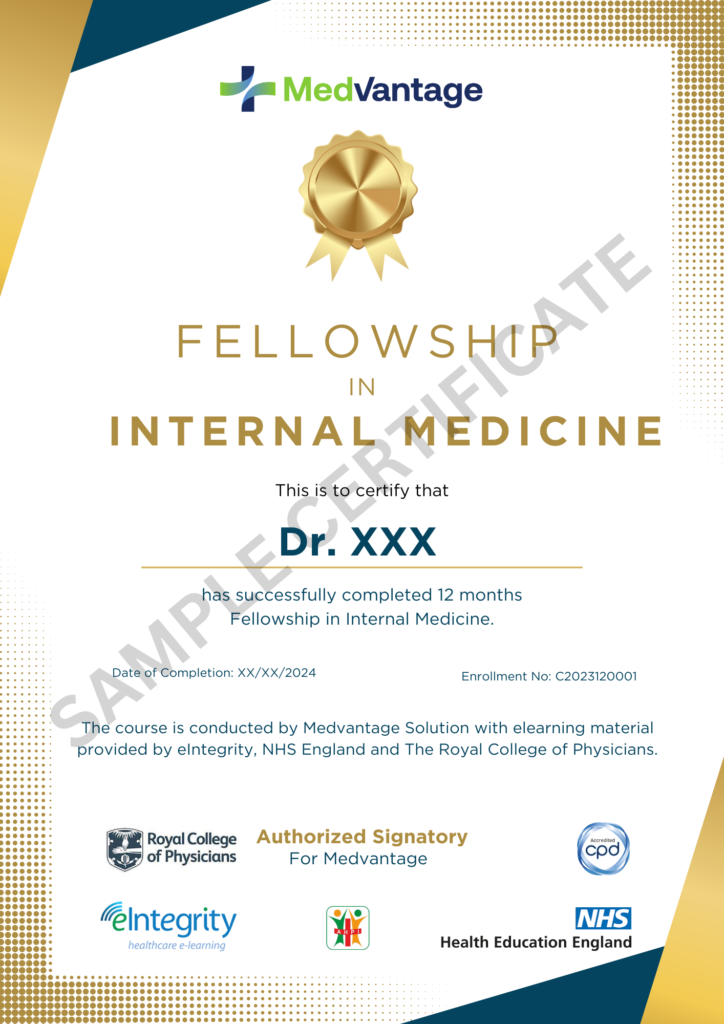
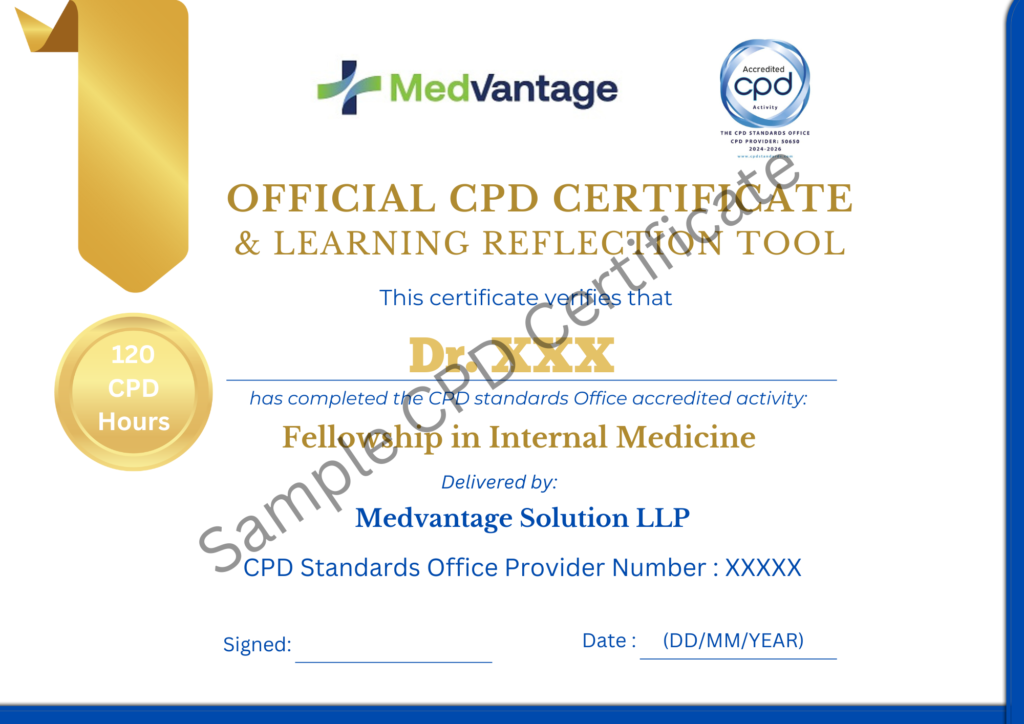
- Earn 120 CPD Points continuing medical education credits
- Digital certification with secure verification
- Share your achievement directly on LinkedIn and other platforms
- Certificate issued by MedVantage Education and recognized industry partners
Frequently Asked Questions
What is the duration of Fellowship in Internal medicine by Medvantage
The Fellowship in Internal medicine by MedVantage is a 12-month hybrid program designed for working medical professionals. The course includes 33 comprehensive learning modules, 120 CPD points, and 3 months of clinical observership at a reputed hospital, providing a balanced blend of online academic learning and clinical exposure.
What is the eligibility to enroll in the Fellowship in Internal medicine?
The Fellowship in Internal medicine by Medvantage is open to healthcare professionals at different stages of their medical careers. You are eligible to enroll if you are:
- MBBS Graduate
- Practicing Doctor (MBBS, MD/MS/M.Ch)
- MD or DNB Resident
- Final-Year MBBS Student
Can I persue this course if I am in final year?
YES, this course can be taken up by final year, graduated & post graduate students.
What’s the importance of this course in India?
You will get additional qualification Certificate (United Kingdom) which will benefit you in increasing the number of patients in OPD.
How many CPD hours are accredited on completion of the Fellowship in Internal medicine?
Upon the successful completion of the Fellowship in Internal medicine, participants are awarded 120 CPD (Continuing Professional Development) hours by the CPD Standards Office, United Kingdom.
Can I pursue the course if I’m working in govt. hospital?
YES, it’s an online course, you can attend classes at any time as per your schedule.
Can I apply if my FMGE is not clear?
YES, you can apply, but by end of the course we need your MCI registration certificate.
In which form, I will get the study material?
In form of modules which includes Live Class with Course Mentor, Recorded Lectures, Webinars and PDFs.
Can international students enroll in the Fellowship in Internal medicine?
Yes. International students are welcome to enroll in the Fellowship in Internal medicine by Medvantage, subject to meeting the program's eligibility criteria and submission of the required academic and professional documents.