

Eligibility Criteria
- MBBS Graduates
- Practicing Doctors (MBBS+MD/MS/M.Ch)
- MBBS+MD And DNB Residents
- Undergraduate Medical Students In The Final Year

Dr. D Peeyuusha
MBBS, MEM, MBA (Hospital Administration)
Consultant Emergency Physician Max Super Speciality Hospital, Noida Sec-128
Fellowship in Critical Care
The Fellowship in Critical Care is a clinically oriented program designed to help MBBS doctors develop practical knowledge and skills in the assessment and management of critically ill patients. The program provides structured learning in critical care medicine, covering essential concepts such as emergency management, ventilatory support, hemodynamic monitoring, sepsis, shock, organ failure, and ICU-based patient care.
Through a combination of comprehensive academic learning and clinical exposure, the Fellowship in Critical Care helps doctors strengthen their decision-making abilities and gain greater confidence in managing patients in critical care settings. It is particularly suited for doctors seeking to enhance their clinical expertise and build a focused career in Critical Care Medicine.
- 12months
- Oct 20, 2026
- 44 modules
- 120 CPD Points
- Mode - Hybrid
- Observership - 3 Month
Course Curriculum - Fellowship in Critical Care
1. Critical Care Fundamentals
- Introduction
- History of Critical Care
- Patient Evaluation and Assessment
2. Basic Sciences For Critical Care
- Anatomy Essentials – 1
- Anatomy Essentials – 2
- Anatomy Essentials – 3
- Physiology essentials – 1
- Physiology essentials – 2
- Physiology essentials – 3
- Physiology essentials – 4
- Physiology essentials -5
- Physics essentials – 1
- Physics essentials – 2
3. Equipments Used In Critical Care
- Medical Gas Supplies
- Gas and Vapour Controls
- Breathing System Components
- Common Breathing Systems
- Principles of Invasive Positive Pressure Ventilation (IPPV)
- Ventilator Settings and Alarms
- Filters, Humidifiers and Scavenging Systems
4. Monitoring in the ICU
- Basic Monitoring: ECG, SpO2 and Blood Pressure
- Gas Monitoring: O2, CO2, and Anaesthetic Agents
- Nerve Stimulators and Temperature Monitoring
5. Preoperative Equipment Check In ICU
- Checking the Anaesthetic Machine
- Checking Other Equipments
- Common Equipment Problems
6. Preoperative Assessment and Management In ICU
- General Preoperative Measures
- The Purpose of Preoperative Visiting
- Assessment Of A Difficult Airway
- ASA Grading and Preoperative Investigations
- Risk and Consent
7. Common Critical Care Conditions
- Assess Patients With Cardiovascular Or Respiratory Diseases
- Identify Problems Posed By Obese & Diabetic Patients
- Identify Risks Posed By Extremes Of Age & Emergency Surgery
8. The Operating Theatre Environment
- Principles Of Safe Practice & Role Of Anaesthetist
- Preparation And Usage of Equipment & Drugs
- General Theatre Conduct
- Medicines Safety In Anaesthetic Practice
9. Induction Of Anaesthesia & Intraoperative Management
- Aims of Anaesthesia
- Basic Principles Of Sedation
- Types of Anaesthesia
10. Management of Airway & Failed Intubation Drills
- Airway Maintenance: Facemask
- The Classic Laryngeal Mask Airway
- Basics of Tracheal Tube – 1
- Basics of Tracheal Tube – 2
- Recognizing Clinical signs & Management of Airway Obstruction
- Recognizing Clinical signs & Management of Difficult Airway
11. Induction of Anaesthesia
- Airway Maintenance: Facemask
- The Classic Laryngeal Mask Airway
- Basics of Tracheal Tube – 1
- Basics of Tracheal Tube – 2
- Recognizing Clinical signs & Management of Airway Obstruction
- Recognizing Clinical signs & Management of Difficult Airway
12. Basic Techniques in General Anaesthesia
- Spontaneous Ventilation with Laryngeal Mask Airway (LMA)
- Ventilation with an Endo Trachial Tube (ETT)
- Indications for Rapid Sequence Induction (RSI)
13. Drugs Used in ICU
- Pre medication
- Intravenous Induction Agents
- Inhalational Anaesthetic Agents
- Perioperative Analgesia
- Neuromuscular Blocking Agents
- Local Anaesthetic Agents
- Drugs Used in an Emergency
14. Maintenance of Anaesthesia
- Maintenance of Anaesthesia and Avoiding Awareness
- Drugs used during Maintenance
- Ventilation During Maintenance: Spontaneous or Mechanical
- Monitoring, Vigilance for Untoward Events and Patient Positioning
- Identify Haemorrhage and Hypovolaemia
15. Postoperative Management
- Reversal and Extubation of Patients
- Management of Slow and Failed Recovery
- Transferring the Patient to Recovery
16. Post-Operative Recovery
- Overview of Recovery
- Airway maintenance and oxygen therapy
- How To Assess Post-Operative Pain
- Ward Visit after Major Surgery
17. Critical Incidents and Resuscitation
- Identify Signs that Indicate Developing Respiratory Problems
- Identify & How to Treat Intraoperative Hypotension, Hypertension
- Bradycardia & Tachycardia
- Recognise & Treatment of Anaphylaxis
- Management of Perioperative Arrest
18. Advanced Life Support
- Principles of Advanced Life Support
19. Principles of Critical Care Management – IV Cannulization
- IV Cannula Insertion
- IV Cannula Removal
- Central Line Insertion
- Central Line Removal
- Arterial Catheterization
- Pulmonary Artery Catheterization
- Urinary Catheterization
20. Mechanical Ventilation and Respiratory Support
- Chest Tube Insertion
- Chest Tube Removal
21. Cardiovascular Support and Arrhythmia Management
- Basic Principles of ECG
- Artificial Cardiac Pacemakers
22. Renal and Metabolic Support in Critical Care
- Electrolyte Disturbances In Critical Illness
- Respiratory Alkalosis
- Nutritional Support In The Intensive Care Unit
23. Central Nervous System
- Lumbar Puncture
24. Critical Care Fundamental
- Introduction
- History of Critical Care
- Patient Evaluation and Assessment
- General Concepts of ICM
- Urgent Situations with Limited Information
25. Comprehensive Critical care Management – Advanced Catheterization
- IV Cannula Insertion
- IV Cannula Removal
- Central Line Insertion
- Central Line Removal
- Nasogastric Tube Insertion
- Arterial Catheterization
- Pulmonary Artery Catheterization
- Urinary Catheterization
- Supra Pubic Catheterization
- Arterial Puncture for Blood Gas Analysis
- Echo
- Transthoracic ECHO
26. Forced Ventilation System and Ventilatory System
- Oxygen Administration
- High Flow Oxygen
- Monitoring Oxygen Saturation
- Laryngoscopy
- Endotracheal Intubation
- Bronchoscopy
- Chest Tube Insertion and Care
- Chest Tube Removal
- Mechanical Ventilation
- BI PAP
- Ventilators
27. Cardiovascular Support and Pacemaker System
- Basic Principles of ECG
- Ischemic Heart Disease
- Tachyarrhythmias
- Bradyarrhythmias
- Wolff–Parkinson–White Syndrome
- Bundle Branch Blocks and Fascicular Blocks
- Inherited Cardiac Arrhythmias
- Artificial Cardiac Pacemakers
- Diseases of the Pericardium and Myocardium
- Drugs and Electrolyte Abnormalities
- Cardioversion
- Defibrillation
28. Neurological Support in Critical Care
- Intracranial Pressure (ICP) Monitoring And Management
- Sedation, Analgesia, And Delirium Management In Intensive Care
- Targeted Temperature Management (TTM) In Neurological Injury
29. Nephrologic and Catabolic Support
- Continuous Renal Replacement Therapy (CRRT)
- Electrolyte And Acid-Base Disturbances In Critical Illness
- Nutritional Support In The Intensive Care Unit
30. Diagnostic Procedures: CNS
- Lumbar Puncture
- Epidural Catheter Removal
31. Gastrointestinal Procedures
- Gastrointestinal Endoscopy
- Biliary Atresia
- Endoscopy With Feeding Tube Insertion
- Abdominal Paracentesis
- Sengstaken Tube Placement
32. Anesthesia
- Management of Pain in Critically Ill Patients
- Anesthesia for Bedside ICU Procedures
- Various Gases used as Anesthetic Agents
33. Introduction to the Approach to the Critically Ill Patient and Airway Management
- Monitoring and Testing the Critical Care Patient
- Nutritional Supplementation in Critically Ill Patients
- Critical Care Scoring Systems
- Cardiopulmonary Resuscitation (CPR)
- Vascular Access
- Oxygen Desaturation
- Bag-Valve-Mask Ventilation
- Cricothyroidotomy (Cricothyrotomy)
- Laryngeal Mask Airway
- Nasotracheal Intubation
- Rapid Sequence Intubation
- Video Laryngoscopy and Fiberoptic-Assisted Tracheal Intubation
- Intubation and Tracheal Suctioning for Meconium Aspiration
34. Ventilation and Respiratory Failure
- Mechanical Ventilation
- Noninvasive Ventilation
- Noninvasive Ventilation Procedures
- Ventilator Graphics
- Ventilator Management
- Respiratory Failure
- Acute Respiratory Distress Syndrome (ARDS)
35. Advanced Topics in Critical Care
- Percutaneous Transtracheal Jet Ventilation
- Dislodged Tracheostomy Positioning Technique
- Tracheostomy
- Tracheostomy Tube Change
36. Pulmonology
- Acute Respiratory Failure
- Aspiration Pneumonitis
- Chronic Obstructive Pulmonary Disease (COPD)
- Acute Bronchial Asthma and Management
- Pulmonary Hypertension
- Acute Inhalational Injury
- Fat Embolism
- Venous Thromboembolism
- Community-Acquired Pneumonia (CAP)
- Hospital-Acquired Pneumonia (Nosocomial Pneumonia) and Ventilator-Associated Pneumonia
37. Neurological Emergencies
- Subdural Hematoma
- Agitation, Confusion, and Neuromuscular Blockade in Critically Ill Patients
- Vitamin B-12 Associated Neurological Diseases
- Metabolic Encephalopathy
- Status Epilepticus
- Spinal Cord Injuries
38. Cardiovascular Emergencies and Advanced Cardiac Life Support
- Evaluation of Chest Pain in ER
- Ischemic Heart Disease
- Acute Coronary Syndrome (Heart Failure)
- Cardiogenic Pulmonary Edema
- Cardiogenic Shock
- Hypertensive Crisis
- Arrythmias
- Pacemakers
- COVID-19’s Effect on Infective Endocarditis in People Who Inject Drugs
39. Gastrointestinal Emergencies
- Acalculous Cholecystitis
- Acute Liver Failure
- Acute Pancreatitis
- Chronic Pancreatitis
- Small-Bowel Obstruction
- Hemoptysis ( GI Bleeding )
40. Endocrine and Renal Disorders in Critical Care
- Hypothyroidism and Myxedema crisis
- Diabetic Ketoacidosis
- Severe Hypoglycemia
- Hyperosmolar Hyperglycemic State
- Management of Hyperglycemia
- Acid Base Balance
- Acidosis
- Alkylosis
- Acute Renal Failure
- Chronic Renal Failure
41. Infectious Diseases in Critical Care
- Encephalitis
- Meningitis
- Infective Endocarditis
- Infection-associated With Catheters and Prosthetic Devices
- Catheter Induced Urinary Infections
- Community-acquired Infections(Malaria ,TB, Dengue)
42. Special Environmental Emergencies in Populations
- Heat Stroke
- Cooling Techniques for Hyperthermia
- Hypothermia
- Frostbite
- Drowning
- High-altitude Syndrome
- Hymenoptera Stings
- Snakebite
43. Sepsis And Shock
- Sepsis and Septic Shock
- Etiology
- Pathophysiology
- Symptoms and Signs
- Diagnosis
- Treatment
- Prognosis
- Bacterial Pneumonia
- Bacterial Sepsis
- Community-Acquired Pneumonia Organism-Specific Therapy
- Neonatal Sepsis
- Pediatric Sepsis
- Peritonitis and Abdominal Sepsis
- Systemic Inflammatory Response Syndrome (SIRS)
- Treatment of Sepsis and Septic Shock in Children
- Shock
44. Toxicology
- Overview of Toxicology
- Specific Toxicities: Acetaminophen, Alcohol, Amphetamine, Arsenic, Benzodiazepine, Cocaine, Cyanide, etc.
- Management of Poisoning and Overdose
- Withdrawal Syndromes
- Corrosive Poisoning
Earn Recognized Certifications
Upon successful completion of the course and all required assessments, participants will be awarded professional certificates that are recognized by leading healthcare institutions.
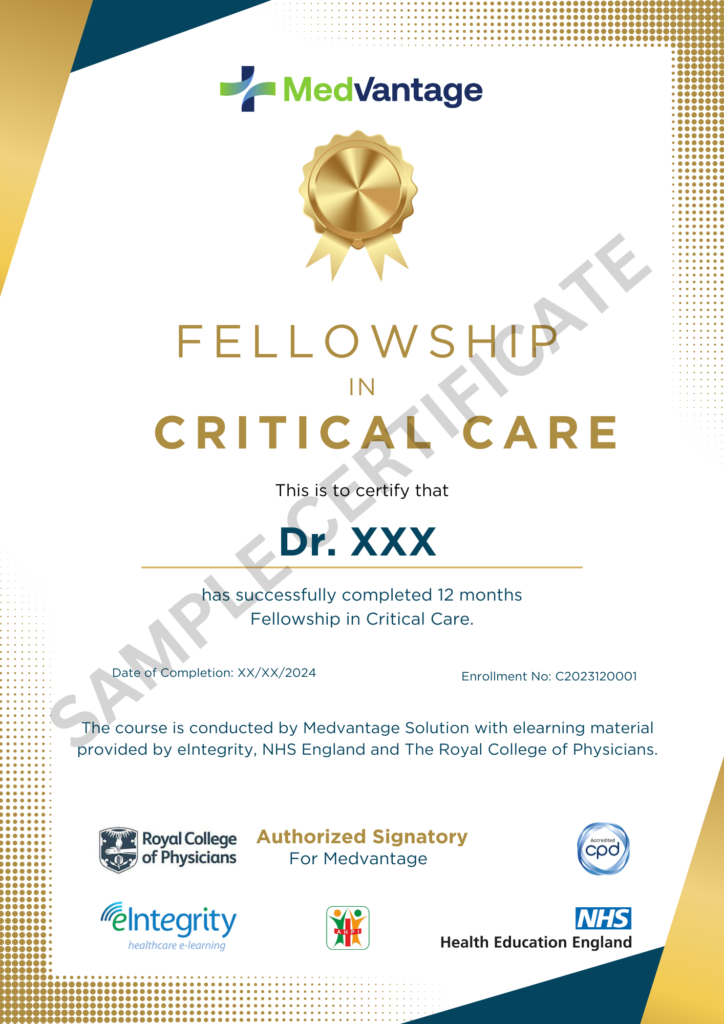
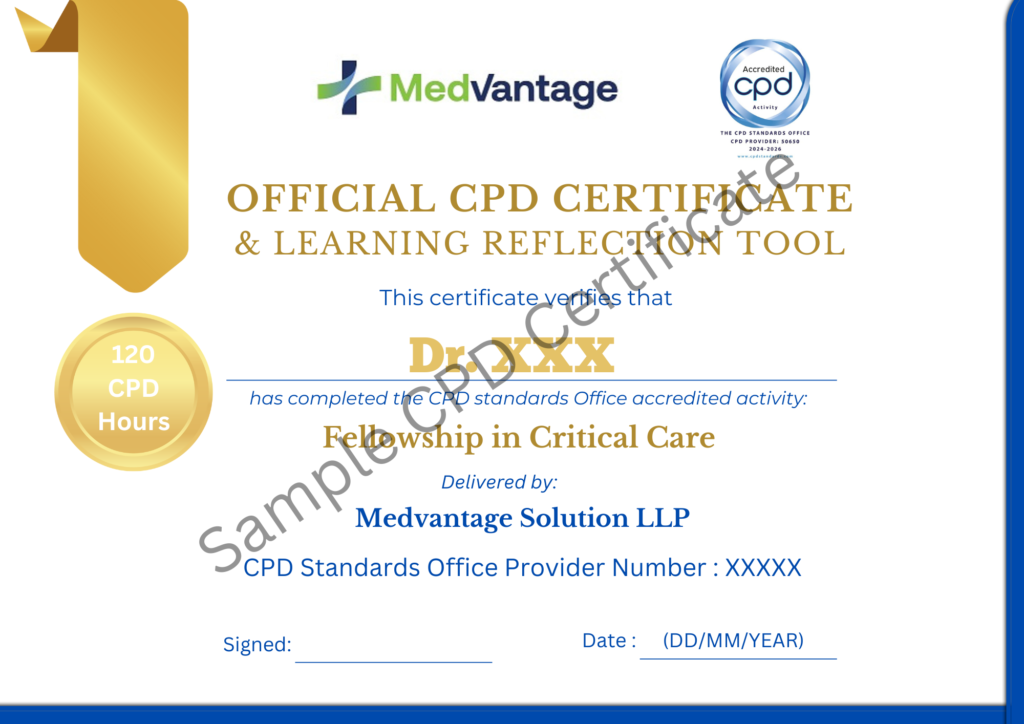
- Earn 120 CPD Points continuing medical education credits
- Digital certification with secure verification
- Share your achievement directly on LinkedIn and other platforms
- Certificate issued by MedVantage Education and recognized industry partners
Frequently Asked Questions
What is the duration of Fellowship in Critical Care by Medvantage
The Fellowship in Critical Care by Medvantage is a 12-month hybrid fellowship program designed to help MBBS doctors build advanced knowledge and practical skills in the management of critically ill patients. The program combines structured online learning with a 3-month hospital-based Clinical Observership, allowing participants to gain real-world exposure under experienced critical care specialists.
What is the eligibility to enroll in the Fellowship in Critical Care?
The Fellowship in Critical Care by Medvantage is open to healthcare professionals at different stages of their medical careers. You are eligible to enroll if you are:
- MBBS Graduate
- Practicing Doctor (MBBS, MD/MS/M.Ch)
- MD or DNB Resident
- Final-Year MBBS Student
Can I persue this course if I am in final year?
YES, this course can be taken up by final year, graduated & post graduate students.
What are the top fellowship courses after MBBS in India?
Explore Medvantage fellowship courses to find a programme aligned with your medical career goals.
The best fellowship course after MBBS depends on your clinical interests, career goals, and preferred area of practice. Popular options include Fellowship in Critical Care, Emergency Medicine, Internal Medicine, Clinical Cardiology, Diabetes Mellitus, Neonatology, Nephrology, Pediatrics, Gastroenterology, and Family Medicine.
What’s the importance of this course in India?
You will get additional qualification Certificate (United Kingdom) which will benefit you in increasing the number of patients in OPD.
How many CPD hours are accredited on completion of the Fellowship in Critical Care?
Upon the successful completion of the Fellowship in Critical Care, participants are awarded 120 CPD (Continuing Professional Development) hours by the CPD Standards Office, United Kingdom.
Can I pursue the course if I’m working in govt. hospital?
YES, it’s an online course, you can attend classes at any time as per your schedule.
Can I apply if my FMGE is not clear?
YES, you can apply, but by end of the course we need your MCI registration certificate.
In which form, I will get the study material?
In form of modules which includes Live Class with Course Mentor, Recorded Lectures, Webinars and PDFs.
Can international students enroll in the Fellowship in Critical Care?
Yes. International students are welcome to enroll in the Fellowship in Critical Care by Medvantage, subject to meeting the program's eligibility criteria and submission of the required academic and professional documents.
Will I get Certificate immediately after completing the course?
YES, you will get the certificate after complete the course.