


Eligibility Criteria
- MBBS/BDS/AYUSH/Nursing & Other Healthcare Graduatess
- Practicing Doctors
- MD And DNB Residents
- Undergraduate Medical Students In The Final Year

Dr. D Peeyuusha
MBBS, MEM, MBA (Hospital Administration)
Consultant Emergency Physician Max Super Speciality Hospital, Noida Sec-128
Certificate In Emergency Medicine
The Certificate in Emergency Medicine equips healthcare professionals with emergency care expertise, emphasizing accurate assessment, rapid decision-making, trauma response, advanced life support, pre-hospital to in-hospital care, cased based studies and patient care.
- 3 Months
- Sep 28, 2026
- 6 modules
- 40 CPD Points
- Mode - Online
Course Curriculum
1. Basics in Emergency Medicine
Introduction to General Considerations in Emergency Medicine
Ethical Principles
Preoperative Evaluation and Perioperative Management
2. Critical Care and Emergency Medicine
- Overview of Critical Care Medicine
- Historical Perspective and Evolution
- Role of Intensivists and Emergency Medicine Physicians
- Ethical Considerations in Critical Care
- Management of Organ Failure in Emergency Medicine
- Renal Failure and Renal Replacement Therapy
- Hepatic Failure and Supportive Care
- Neurologic Failure and Brain Protection
- Gastrointestinal Failure and Nutritional Support
3. Monitoring Patients with Critical Condition
- Hemodynamic Monitoring
- Respiratory Monitoring
- Neurologic Monitoring
- Renal Monitoring
- Metabolic and Nutritional Monitoring
4. Sepsis And Shock In Emergency Medicine
- Sepsis and Septic Shock
- Etiology & Pathophysiology
- Symptoms and Signs
- Diagnosis &Treatment
- Prognosis
- Bacterial Pneumonia & Bacterial Sepsis
- Community-Acquired Pneumonia Organism-Specific Therapy
- Neonatal Sepsis & Pediatric Sepsis
- Peritonitis & Abdominal Sepsis
- Systemic Inflammatory Response Syndrome (SIRS)
- Treatment of Sepsis and Septic Shock in Children
- Hypovolemic Shock & Anaphylactic Shock
5. Dermatological Emergencies
Dermatology
Introduction
Skin anatomy and physiology
Dermatological immunology
Pharmacology in dermatology
Dermatological Examination and Diagnostic Techniques:
Skin examination techniques
Deramatoscopy
Skin biopsy and histopathology
Common Dermatological Conditions:
Acne and Rosacea
Eczema and Dermatitis
Psoriasis
Infections (bacterial, viral, fungal)
Urticaria and Angioedema
Disorders of Pigmentation
Hair and Nail Disorders
Dermatological Emergencies:
Stevens-Johnson syndrome
Toxic epidermal necrolysis
Dermatologic manifestations of systemic diseases
Sexually Transmitted Infections (STIs):
Dermatologic manifestations of STIs
Diagnosis and management of STIs
6. Palliative Care
Introduction
Definition and principles of palliative care
Communication Skills in Palliative Care:
Breaking bad news
Advanced communication techniques
Cultural competency and sensitivity
Ethical and Legal Issues in Palliative Care:
End-of-life decision-making
Advance care planning and directives
Ethical dilemmas in palliative care
Pain & Symptom Assessment and Management:
Multidimensional pain assessment
Pharmacological interventions
Non-pharmacological approaches
Management of common symptoms – nausea, dyspnea, fatigue
Gastrointestinal symptom & Management
Respiratory symptom & Management
Palliative Care Across the Lifespan:
Pediatric palliative care
Palliative care for young adults
Geriatric palliative care
End-of-Life Care:
Approaches to care in the final days and hours
Recognizing imminent death
Care after death
Earn Recognized Certifications
Upon successful completion of the course and all required assessments, participants will be awarded professional certificates that are recognized by leading healthcare institutions.
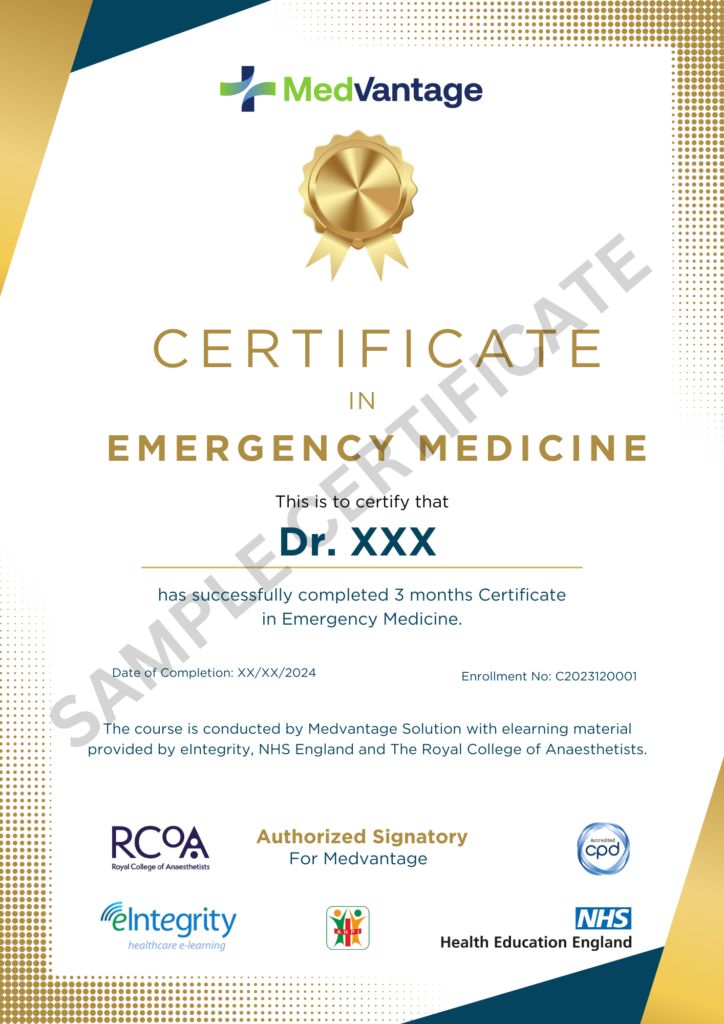
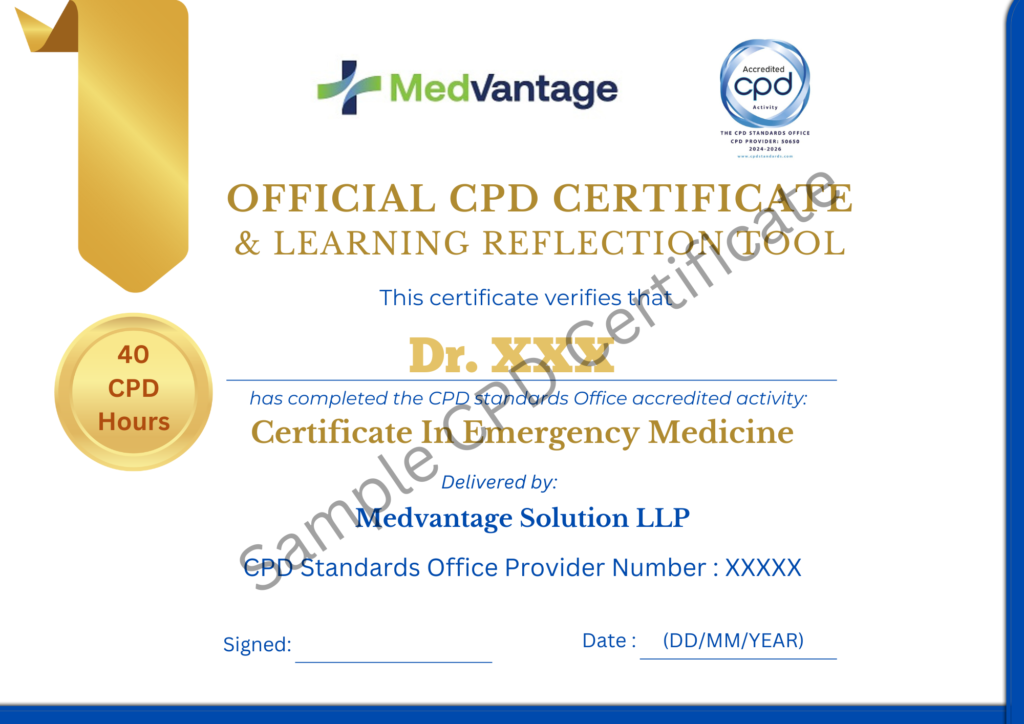
- Earn 40 CPD Points continuing medical education credits
- Digital certification with secure verification
- Share your achievement directly on LinkedIn and other platforms
- Certificate issued by MedVantage Education and recognized industry partners