


Eligibility Criteria
- MBBS/BDS/AYUSH/Nursing & Other Healthcare Graduates
- Practicing Doctors
- MD And DNB Residents
- Undergraduate Medical Students In The Final Year

Dr. D Peeyuusha
MBBS, MEM, MBA (Hospital Administration)
Consultant Emergency Physician Max Super Speciality Hospital, Noida Sec-128
Advanced Certificate in Emergency Medicine
Advanced Certificate in Emergency Medicine course aims to provide healthcare professionals with the fundamental expertise, capabilities, and mindset necessary for proficiently handling medical emergencies and acute situations across diverse healthcare environments ranging from nursing homes to hospitals.
- 6 Months
- Sep 29, 2026
- 19 modules
- 80 CPD Points
- Mode - Online
Course Curriculum
1. Basics in Emergency Medicine
Introduction to General Considerations in Emergency Medicine
Ethical Principles
Preoperative Evaluation and Perioperative Management
2. Critical Care and Emergency Medicine
Overview of Critical Care Medicine
Historical Perspective and Evolution
Role of Intensivists and Emergency Medicine Physicians
Ethical Considerations in Critical Care
Management of Organ Failure in Emergency Medicine
Renal Failure and Renal Replacement Therapy
Hepatic Failure and Supportive Care
Neurologic Failure and Brain Protection
Gastrointestinal Failure and Nutritional Support
3. Monitoring Patients with Critical Condition
Hemodynamic Monitoring
Respiratory Monitoring
Neurologic Monitoring
Renal Monitoring
Metabolic and Nutritional Monitoring
4. Sepsis And Shock In Emergency Medicine
Sepsis and Septic Shock
Etiology & Pathophysiology
Symptoms and Signs
Diagnosis &Treatment
Prognosis
Bacterial Pneumonia & Bacterial Sepsis
Community-Acquired Pneumonia Organism-Specific Therapy
Neonatal Sepsis & Pediatric Sepsis
Peritonitis & Abdominal Sepsis
Systemic Inflammatory Response Syndrome (SIRS)
Treatment of Sepsis and Septic Shock in Children
Hypovolemic Shock & Anaphylactic Shock
5. Dermatological Emergencies
Dermatology
Introduction
Skin anatomy and physiology
Dermatological immunology
Pharmacology in dermatology
Dermatological Examination and Diagnostic Techniques:
Skin examination techniques
Deramatoscopy
Skin biopsy and histopathology
Common Dermatological Conditions:
Acne and Rosacea
Eczema and Dermatitis
Psoriasis
Infections (bacterial, viral, fungal)
Urticaria and Angioedema
Disorders of Pigmentation
Hair and Nail Disorders
Dermatological Emergencies:
Stevens-Johnson syndrome
Toxic epidermal necrolysis
Dermatologic manifestations of systemic diseases
Sexually Transmitted Infections (STIs):
Dermatologic manifestations of STIs
Diagnosis and management of STIs
6. Palliative Care
Introduction
Definition and principles of palliative care
Communication Skills in Palliative Care:
Breaking bad news
Advanced communication techniques
Cultural competency and sensitivity
Ethical and Legal Issues in Palliative Care:
End-of-life decision-making
Advance care planning and directives
Ethical dilemmas in palliative care
Pain & Symptom Assessment and Management:
Multidimensional pain assessment
Pharmacological interventions
Non-pharmacological approaches
Management of common symptoms – nausea, dyspnea, fatigue
Gastrointestinal symptom & Management
Respiratory symptom & Management
Palliative Care Across the Lifespan:
Pediatric palliative care
Palliative care for young adults
Geriatric palliative care
End-of-Life Care:
Approaches to care in the final days and hours
Recognizing imminent death
Care after death
7. Patient Assessment
Essentials for Good Emergency Physician
Emergency Design and Staffing
Rapid Assessment and Treatment in Emergency
Wound Assessment and Management
Chronic Pain Management
Point of Care Testing
8. Respiratory & Pulmonology Medicine
Hemoptysis
Acute Respiratory Failure
Acute Exacerbation of Asthma and Chronic Obstructive Pulmonary Disease
Pneumonia
Pneumothorax
Aspiration Pneumonitis
Chronic Obstructive Pulmonary Disease (COPD)
Acute Bronchial Asthma and Management
Pulmonary Hypertension
Acute Inhalational Injury
Fat Embolism
Venous Thromboembolism
9. Endocrine & Renal Disorders
Hypoglycemia
Diabetic Ketoacidosis in Adults
Thyroid Emergencies
Acute Adrenal Crisis
Diabetic Ketoacidosis
Severe Hypoglycemia
Hyperosmolar Hyperglycemic State
Management of Hyperglycemia
Acid Base Balance
Acidosis
Alkalosis
Gout
10. Cardiology
Acute Pain Management
Chest Pain
Palpitations
Syncope
Cardiogenic Shock
Heart Failure
Bradyarrhythmia
Tachyarrhythmia
Temporary Pacing
Hypertensive Emergency
Aortic Dissection
Electrocardiogram Interpretation
11. Hematology
Introduction to Hematology:
Overview of blood and its components
Historical perspective of hematology
Importance of hematology in healthcare
Hematopoiesis:
Formation and development of blood cells
Regulation of hematopoiesis
Bone marrow anatomy and function
Red Blood Cells:
Structure and function of red blood cells
Hemoglobin and oxygen transport
Red blood cell disorders (e.g., anemia)
White Blood Cells:
Types of white blood cells (neutrophils, lymphocytes, monocytes, eosinophils, basophils)
Functions and roles in the immune system
White blood cell disorders (e.g., leukemias)
Platelets and Hemostasis:
Platelet structure and function
Blood clotting mechanisms
Disorders of hemostasis (e.g., thrombocytopenia, hemophilia)
Blood Typing and Transfusion Medicine:
ABO and Rh blood typing
Blood transfusion compatibility
Blood transfusion reactions and complications
Hematologic Diseases:
Benign and malignant disorders of the blood
Diagnosis and management of hematologic diseases
Hematologic malignancies (e.g., lymphomas, myelomas)
Hemostasis Disorders:
Coagulation disorders
Thrombosis and anticoagulant therapy
Bleeding disorders
Laboratory Techniques in Hematology:
Blood cell counting and morphology
Hematologic testing (e.g., complete blood count, coagulation tests)
Molecular and genetic testing in hematology
Clinical Cases and Problem-Solving:
Application of knowledge to real-world cases
Problem-solving exercises and case studies
Ethical and Social Issues in Hematology:
Ethical considerations in blood-related treatments
Social implications of blood disorders and treatment
12. Gastrointestinal
Gastrointestinal Bleed in Emergency
Acute Pancreatitis
Acute Appendicitis
Perforation Peritonitis
Intestinal Obstruction
Electrolyte Imbalance
Emergencies in Renal Failure and Dialysis Patients
Urinary Tract Infections
Hematuria
Acute Urinary Retention
Acute cholecystitis,
Liver Cirrhosis
13. Hepatology
Introduction to Hepatology
Overview of the liver’s structure and function
Importance of the liver in metabolism and detoxification
Introduction to common liver diseases
Liver Anatomy and Physiology:
Detailed study of liver anatomy
Hepatic blood supply and circulation
Liver cell (hepatocyte) structure and function
Liver Function Tests:
Understanding and interpreting liver function tests
Assessment of liver enzymes, bilirubin, and other markers
Diagnostic significance of liver function tests
Liver Imaging:
Imaging techniques for assessing liver health (ultrasound, CT scan, MRI)
Liver biopsy: indications, procedures, and interpretation
Non-invasive methods for assessing liver fibrosis
Viral Hepatitis:
Hepatitis A, B, C, D, and E viruses
Transmission, clinical manifestations, and prevention
Diagnosis and management of viral hepatitis
Alcoholic Liver Disease:
Effects of alcohol on the liver
Alcoholic hepatitis and cirrhosis
Treatment and management of alcoholic liver disease
Non-Alcoholic Fatty Liver Disease (NAFLD) and Non-Alcoholic Steatohepatitis (NASH):
Risk factors and pathogenesis
Diagnosis and staging of NAFLD/NASH
Management and lifestyle interventions
Cirrhosis:
Causes and progression of cirrhosis
Complications of cirrhosis (e.g., portal hypertension, ascites, hepatic encephalopathy)
Management and supportive care for cirrhotic patients
Liver Transplantation:
Indications for liver transplantation
Evaluation of transplant candidates and donors
Post-transplant care and complications
Autoimmune Liver Diseases:
Primary biliary cholangitis (PBC)
Primary sclerosing cholangitis (PSC)
Autoimmune hepatitis
Pediatric Hepatology:
Liver diseases in children
Unique considerations in pediatric liver transplantation
Ethical and Social Issues in Hepatology:
Ethical considerations in liver transplantation
Social impact of chronic liver diseases
14. Gynecology & Obstetric
Gynecology Disorders:
Physiology of Menstruation
Pubertal Changes
Menstrual Problems in Young and Small Girls
Intersex
PCOS
Abnormal Uterine Bleeding
Gonorrhea
Chlamydia
Chancroid
Bacterial Vaginosis
Candidiasis
Trichomoniasis
HIV
Syphilis
Amenorrhea
Embryology of Uterus
Prolapse
Post Menopausal Bleeding
Obstetric Disorders:
Clinical Assessment of the Pregnant Patient
Vaginal Bleeding
Ectopic Pregnancy
Female Reproductive Tract
Endometriosis
IUCD
PCOD
Preeclampsia
15. Pediatric Emergencies
Fever in Children
Vomiting, Diarrhea and Dehydration in Children
Febrile Seizure and Status Epilepticus in Children
Central Nervous System Infections in Children
Diabetes Management in Children
16. Special Situations
Disaster and Mass Casualty Management in Emergency
17. Sepsis And Shock Emergencies
Sepsis and Septic Shock
Etiology
Pathophysiology
Symptoms and Signs
Diagnosis
Treatment
Prognosis
Bacterial Pneumonia
Bacterial Sepsis
Neonatal Sepsis
Pediatric Sepsis
Peritonitis and Abdominal Sepsis
Systemic Inflammatory Response Syndrome (SIRS)
Treatment of Sepsis and Septic Shock in Children
Shock
18. Toxicology
Overview of Toxicology
Approach to the Poisoned Patient
Antidotes Commonly Used in Overdose
Treatment of Hypotension Associated with Drug Poisoning
Carbon Monoxide Poisoning
Illicit Drugs and Controlled Substances of Abuse
Alcohol Withdrawal
Salicylate Overdose
Tricyclic Antidepressant Overdose
Monoamine Oxidase Inhibitor Overdose
Ethanol Poisoning
Ethylene Glycol Poisoning
Specific Toxicities: Acetaminophen, Alcohol, Amphetamine, Cocaine
Withdrawal Syndromes
Management of Poisoning and Overdose
19. Environmental Emergencies
Emergency Department – Anaphylaxis
Emergency Department – Hymenoptera Bites & Stings
Heat Stroke
Cooling Techniques for Hyperthermia
Hypothermia
Earn Recognized Certifications
Upon successful completion of the course and all required assessments, participants will be awarded professional certificates that are recognized by leading healthcare institutions.
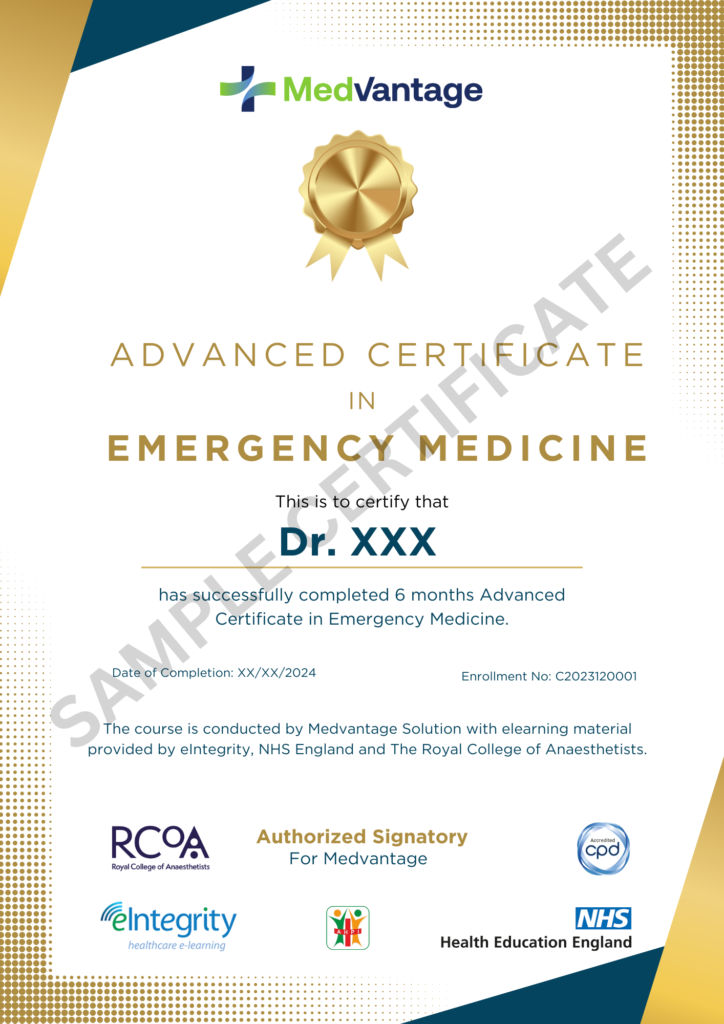
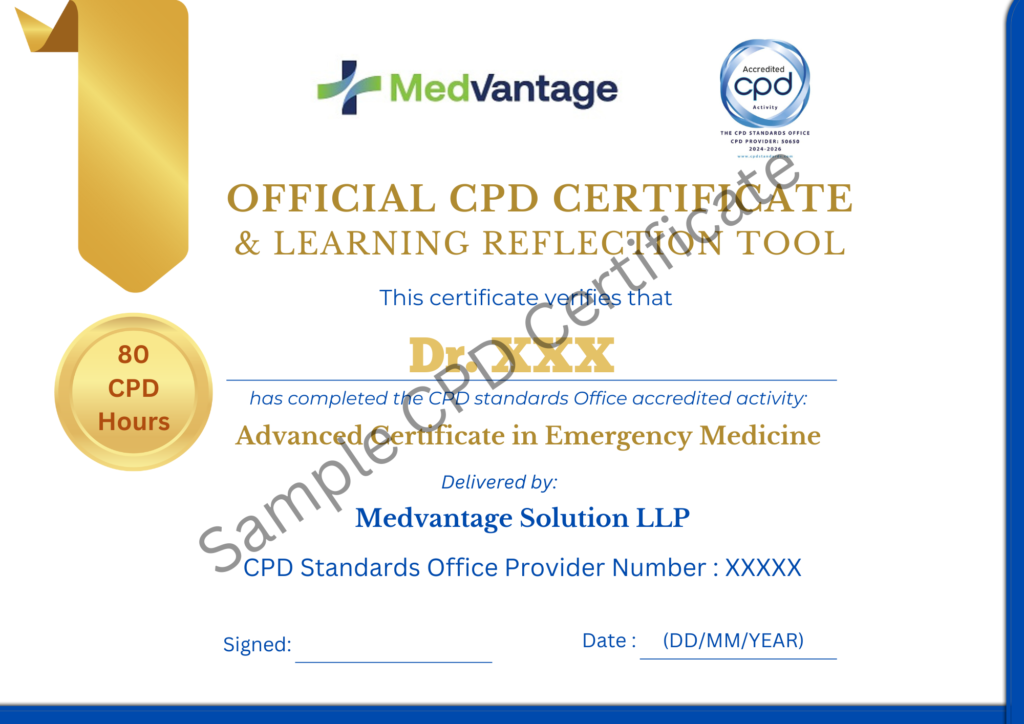
- Earn 80 CPD Points continuing medical education credits
- Digital certification with secure verification
- Share your achievement directly on LinkedIn and other platforms
- Certificate issued by MedVantage Education and recognized industry partners