


Eligibility Criteria
- MBBS Graduates
- Practicing Doctors (MBBS+MD/MS/M.Ch)
- MBBS+MD And DNB Residents
- Undergraduate Medical Students In The Final Year

Dr. Soumya Banerjee
MBBS (Cal) , MS (General and Laparoscopic Surgery)
IPGMER and SSKM Medical College and Hospital
Fellowship in Family Medicine
Our Fellowship in Family Medicine is designed for MBBS students seeking progressive training in the field of family medicine. This program provides a compendious approach to patient care, equipping participants with the skills and knowledge to become comprehensive healthcare specialists.
- 12 Months
- Oct 22, 2026
- 29 modules
- 120 CPD Points
- Mode - Hybrid
- Observership - 1 Month
Course Curriculum
1. Foundations of Family Medicine Practice
Understanding the pivotal role of family in healthcare
Effective communication skills
Counseling skills and health promotion
2. Basic Sciences for Family Medicine
Anatomy Essentials
Physiology Essentials
Physics Essentials
3. Dermatology
Skin anatomy and physiology
Immunology and Pharmacology in dermatology
Dermatological Examination and Diagnostic Techniques
Common Dermatological Conditions:
Psoriasis & Infections (bacterial, viral, fungal)
Urticaria and Angioedema & Disorders of Pigmentation
Hair and Nail Disorders
Skin Cancer and Melanoma
Melasma
4. Geriatric Medicine
Geriatric Medicine
Aging Physiology and Pathophysiology
Comprehensive Geriatric Assessment
Functional Assessment
Geriatric Syndromes
5. Psychiatry
Psychiatry Introduction
Psychiatric Interview and Mental Status Examination
Neurodevelopmental Disorders
Anxiety Disorders
Eating Disorders
6. Respiratory & Pulmonology Medicine
Hemoptysis
Acute Respiratory Failure
Acute Exacerbation of Asthma and Chronic Obstructive Pulmonary Disease
Pneumonia
Pneumothorax and Insertion of Chest Tube
Pulmonary Embolism
Acute Respiratory Failure
Aspiration Pneumonitis
Chronic Obstructive Pulmonary Disease (COPD)
Acute Bronchial Asthma and Management
Pulmonary Hypertension
Acute Inhalational Injury
Fat Embolism
Venous Thromboembolism
Community-Acquired Pneumonia (CAP)
Hospital-Acquired Pneumonia (Nosocomial Pneumonia) and Ventilator-Associated Pneumonia
7. Endocrine & Renal Disorders
Endocrine & Renal Disorders
Hypoglycemia
Diabetic Ketoacidosis in Adults
Thyroid Emergencies
Acute Adrenal Crisis
Hypothyroidism and Myxedema crisis
Severe Hypoglycemia
Hyperosmolar Hyperglycemic State
Management of Hyperglycemia
Acid Base Balance
Acidosis
Alkalosis
Continuous Renal Replacement Therapy (CRRT)
Electrolyte And Acid-Base Disturbances in Critical Illness
Pituitary Disorders
Hypothalamus and Posterior Pituitary Disorders
Gout
8. Cardiology
Acute Pain Management
Chest Pain
Palpitations
Syncope
Acute Coronary Syndrome: Risk Stratification
Cardiogenic Shock
Heart Failure
Bradyarrhythmia
Tachyarrhythmia
Temporary Pacing
Hypertensive Emergency
Aortic Dissection
Care of Patient on Anticoagulation
Cardiac Biomarkers
Electrocardiogram Interpretation
Role of Echocardiography
Coronary Computed Tomography
Precardiac Surgery Evaluation
Postcardiac Surgical Emergencies
9. Hematology
Introduction
Overview of blood and its components
Historical perspective of hematology
Importance of hematology in healthcare
Hematopoiesis:
Formation and development of blood cells
Regulation of hematopoiesis
Bone marrow anatomy and function
Red Blood Cells:
Structure and function of red blood cells
Hemoglobin and oxygen transport
Red blood cell disorders (e.g., anemia)
White Blood Cells:
Types of white blood cells (neutrophils, lymphocytes, monocytes, eosinophils, basophils)
Functions and roles in the immune system
White blood cell disorders (e.g., leukemias)
Platelets and Hemostasis:
Platelet structure and function
Blood clotting mechanisms
Disorders of hemostasis (e.g., thrombocytopenia, hemophilia)
Blood Typing and Transfusion Medicine:
ABO and Rh blood typing
Blood transfusion compatibility
Blood transfusion reactions and complications
Hematologic Diseases:
Benign and malignant disorders of the blood
Diagnosis and management of hematologic diseases
Hematologic malignancies (e.g., lymphomas, myelomas)
Hemostasis Disorders:
Coagulation disorders
Thrombosis and anticoagulant therapy
Bleeding disorders
Laboratory Techniques in Hematology:
Blood cell counting and morphology
Hematologic testing (e.g., complete blood count, coagulation tests)
Molecular and genetic testing in hematology
Clinical Cases and Problem-Solving:
Application of knowledge to real-world cases
Problem-solving exercises and case studies
10. Gastrointestinal
Introduction
Gastrointestinal Bleed in Emergency
Hepatic Encephalopathy
Acute Pancreatitis
Acute Appendicitis
Perforation Peritonitis
Intestinal Obstruction
Electrolyte Imbalance
Acute Kidney Injury in Sepsis
Emergencies in Renal Failure and Dialysis Patients
Urinary Tract Infections
Hematuria
Acute Urinary Retention
Acute cholecystitis,
Acute cholangitis,
Acute pancreatitis
Amebic and pyogenic liver abscess
Cholangitis
Liver Cirrhosis
11. Hepatology
Introduction
Overview of the liver’s structure and function
Importance of the liver in metabolism and detoxification
Introduction to common liver diseases
Liver Anatomy and Physiology:
Detailed study of liver anatomy
Hepatic blood supply and circulation
Liver cell (hepatocyte) structure and function
Liver Function Tests:
Understanding and interpreting liver function tests
Assessment of liver enzymes, bilirubin, and other markers
Diagnostic significance of liver function tests
Liver Imaging:
Imaging techniques for assessing liver health (ultrasound, CT scan, MRI)
Liver biopsy: indications, procedures, and interpretation
Non-invasive methods for assessing liver fibrosis
Viral Hepatitis:
Hepatitis A, B, C, D, and E viruses
Transmission, clinical manifestations, and prevention
Diagnosis and management of viral hepatitis
Alcoholic Liver Disease:
Effects of alcohol on the liver
Alcoholic hepatitis and cirrhosis
Treatment and management of alcoholic liver disease
Non-Alcoholic Fatty Liver Disease (NAFLD) and Non-Alcoholic Steatohepatitis (NASH):
Risk factors and pathogenesis
Diagnosis and staging of NAFLD/NASH
Management and lifestyle interventions
Cirrhosis:
Causes and progression of cirrhosis
Complications of cirrhosis (e.g., portal hypertension, ascites, hepatic encephalopathy)
Management and supportive care for cirrhotic patients
Liver Transplantation:
Indications for liver transplantation
Evaluation of transplant candidates and donors
Post-transplant care and complications
Autoimmune Liver Diseases:
Primary biliary cholangitis (PBC)
Primary sclerosing cholangitis (PSC)
Autoimmune hepatitis
Pediatric Hepatology:
Liver diseases in children
Unique considerations in pediatric liver transplantation
Emerging Therapies in Hepatology:
Advancements in the treatment of liver disease
Ethical and Social Issues in Hepatology:
Ethical considerations in liver transplantation
Social impact of chronic liver diseases
12. Sepsis And Shock Medicine
Sepsis and Septic Shock
Etiology
Pathophysiology
Symptoms and Signs
Diagnosis
Treatment
Prognosis
Bacterial Pneumonia
Bacterial Sepsis
Community-Acquired Pneumonia Organism-Specific Therapy
Neonatal Sepsis
Pediatric Sepsis
Peritonitis and Abdominal Sepsis
Systemic Inflammatory Response Syndrome (SIRS)
Treatment of Sepsis and Septic Shock in Children
Shock
12. Gynecology Disorders
Physiology of Menstruation
Pubertal Changes
Menstrual Problems in Young and Small Girls
Intersex
PCOS
Abnormal Uterine Bleeding
Gonorrhea
Chlamydia
Chancroid
Bacterial Vaginosis
Candidiasis
Trichomoniasis
HIV
Syphilis
Amenorrhea
Embryology of Uterus
Prolapse
Post Menopausal Bleeding
13.Obstetric Disorders
Clinical Assessment of the Pregnant Patient
Vaginal Bleeding
Ectopic Pregnancy
Female Reproductive Tract
Endometriosis
IUCD
PCOD
Preeclampsia
14. Foundations of Family Medicine Practice
Understanding the pivotal role of family in healthcare
Developing effective communication and consulting skills
Emphasis on counseling skills and health promotion
Importance of record-keeping in family medicine
Breaking bad news
Advanced communication techniques
Cultural competency and sensitivity
15. Emergency Protocols in Family Healthcare
Management of poisonings
Management of bites
Management of burns
Management of stings
Handling opioid poisoning
Handling of crush injuries
Handling of surgical emergencies
Special focus on cardiovascular emergencies
Special focus on Respiratory emergencies
Special focus on central nervous system emergencies
16. Clinical Analysis of Adult Medicine
Hemoptysis
Acute Respiratory Failure
Pneumonia
Pneumothorax and Insertion of Chest Tube
Pulmonary Embolism
Acute Respiratory Failure
Aspiration Pneumonitis
17. Pediatrics
Emphasis on growth & development
Emphasis on Immunization
Exploration of common pediatric disorders and case studies
Fever in Children
Vomiting, Diarrhea and Dehydration in Children
Malnutrition in Children
Diabetes Management in Children
Pediatric Cardiac Emergencies: Evaluation and Management
18. Obstetrics and Gynecology
Physiology of Menstruation
Pubertal Changes
Menstrual Problems in Young and Small Girls
Intersex
PCOS
Abnormal Uterine Bleeding
Gonorrhea
Chlamydia
Chancroid
Bacterial Vaginosis
Candidiasis
Trichomoniasis
HIV
UTI and UTI in pregnancy
Amenorrhea
Embrology of Uterus
Mullerian Abnormalities
Fibroids
Post Menopausal Bleeding
Ovarian Tumors
Vulvar Cancer
Endometrial Cancer
Clinical Assessment of the Pregnant Patient
Vaginal Bleeding
Emergency Delivery
Female Reproductive Tract
IUCD
PCOD
Medical Disorders Complicating Pregnancy
19. Infectious & Sexually Transmitted Diseases
Definition of infectious diseases
Historical perspective
Types of infectious agents (bacteria, viruses, fungi, parasites)
Overview of major infectious diseases
Vaccines and immunization
Definition and characteristics of emerging infectious diseases
Case studies of recent outbreaks (e.g., COVID-19, Ebola)
Respiratory infections (e.g., influenza, tuberculosis)
Gastrointestinal infections (e.g., foodborne illnesses)
Vector-borne diseases (e.g., malaria, Zika virus)
Prevention and control strategies
Strategies for combating antimicrobial resistance
20. Endocrine & Renal Disorders & Geriatrics
Hypoglycemia
Diabetic Ketoacidosis in Adults
PPT: Hyperthyroidism
Thyroid Emergencies
Acute Adrenal Crisis
Diabetic Ketoacidosis
Severe Hypoglycemia
Hyperosmolar Hyperglycemic State
Acid Base Balance
Acidosis
Alkalosis
Electrolyte And Acid-Base Disturbances in Critical Illness
Geriatric Medicine
Normal aging processes
Falls and gait disorders
Cardiovascular diseases in the elderly
Neurological disorders
21. Otolaryngology
Definition and scope of otolaryngology
Historical development of ENT practice
Overview of head and neck anatomy
Otoscopy and examination of the ear
Nasal endoscopy and examination of the nose and sinuses
Hearing loss: causes and management
Otitis media and external ear infections
Thyroid and parathyroid surgery
Facial trauma and reconstructive surgery
Cosmetic procedures in otolaryngology
Surgical approaches to facial anomalies
Pediatric ENT conditions and interventions
Advances in ENT technologies and procedures
22. Ophthalmology
Definition and scope of ophthalmology
Historical development of ophthalmic practice
Overview of eye anatomy and physiology
Visual acuity assessment
Ophthalmic instruments and their uses
Fundoscopy and slit-lamp examination
Myopia, hyperopia, astigmatism, and presbyopia
Principles of optics in ophthalmology
Earn Recognized Certifications
Upon successful completion of the course and all required assessments, participants will be awarded professional certificates that are recognized by leading healthcare institutions.
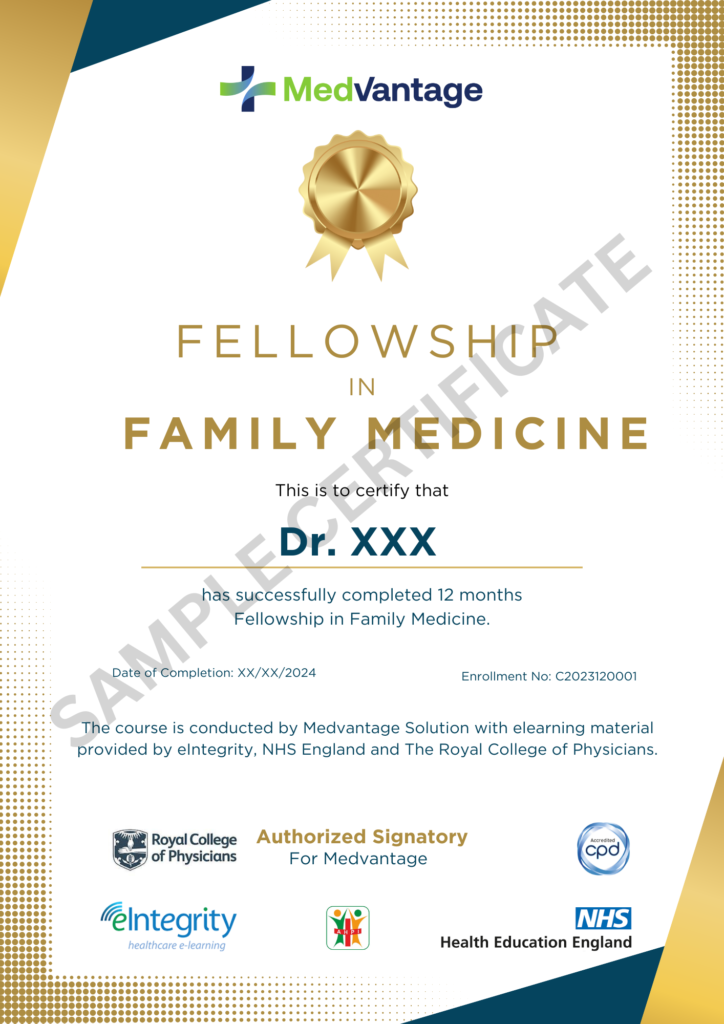
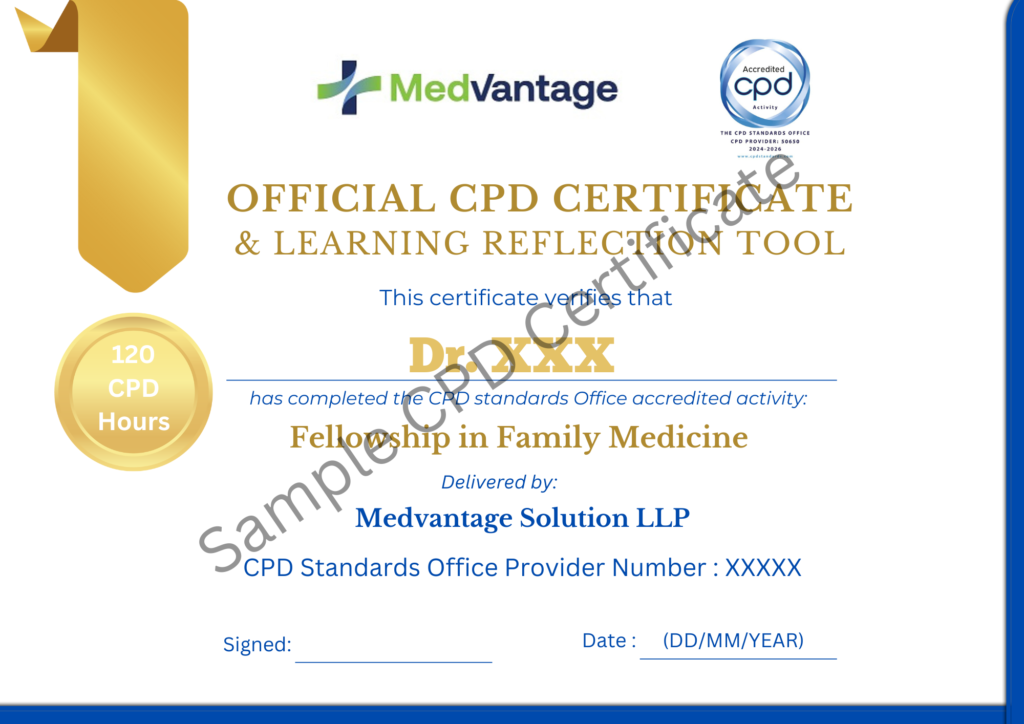
- Earn 120 CPD Points continuing medical education credits
- Digital certification with secure verification
- Share your achievement directly on LinkedIn and other platforms
- Certificate issued by MedVantage Education and recognized industry partners
Frequently Asked Questions
What is the duration of Fellowship in Family Medicine by Medvantage
The Fellowship in Family Medicine by MedVantage is a 12-month hybrid program designed for working medical professionals. The course includes 22 comprehensive learning modules, 120 CPD points, and 1 month of clinical observership at a reputed hospital, providing a balanced blend of online academic learning and clinical exposure.
What is the eligibility to enroll in the Fellowship in Family Medicine?
The Fellowship in Family Medicine by Medvantage is open to healthcare professionals at different stages of their medical careers. You are eligible to enroll if you are:
- MBBS Graduate
- Practicing Doctor (MBBS, MD/MS/M.Ch)
- MD or DNB Resident
- Final-Year MBBS Student
Can I persue this course if I am in final year?
YES, this course can be taken up by final year, graduated & post graduate students.
What’s the importance of this course in India?
You will get additional qualification Certificate (United Kingdom) which will benefit you in increasing the number of patients in OPD.
How many CPD hours are accredited on completion of the Fellowship in Family Medicine?
Upon the successful completion of the Fellowship in Family Medicine, participants are awarded 120 CPD (Continuing Professional Development) hours by the CPD Standards Office, United Kingdom.
Can I pursue the course if I’m working in govt. hospital?
YES, it’s an online course, you can attend classes at any time as per your schedule.
Can I apply if my FMGE is not clear?
YES, you can apply, but by end of the course we need your MCI registration certificate.
In which form, I will get the study material?
In form of modules which includes Live Class with Course Mentor, Recorded Lectures, Webinars and PDFs.
Can international students enroll in the Fellowship in Family Medicine?
Yes. International students are welcome to enroll in the Fellowship in Family Medicine by Medvantage, subject to meeting the program's eligibility criteria and submission of the required academic and professional documents.