

Eligibility Criteria
- MBBS Graduates
- Practicing Doctors (MBBS+MD/MS/M.Ch)
- MBBS+MD And DNB Residents
- Undergraduate Medical Students In The Final Year

Fellowship in Dermatology
The Fellowship in Dermatology is intended for MBBS physicians who want to improve their clinical expertise in identifying and treating prevalent dermatological disorders. Skin, hair, nail, infectious, inflammatory, pigmentary, and cosmetic problems are all covered in the program, along with useful methods for patient assessment and therapy planning. Physicians get more comfortable handling dermatological patients in routine clinical practice through expert-led learning, case-based discussions, and clinical observership.
- 12 months
- Oct 20, 2026
- 20 modules
- 120 CPD Points
- Mode - Hybrid
- Observership - 1 Month
Course Curriculum
1. Introduction and Basic Sciences for Dermatology
- Introduction
- Skin anatomy and physiology
- Dermatological immunology
- Pharmacology in dermatology
- Anatomy Essentials-1
- Anatomy Essentials-2
- Anatomy Essentials-3
- Physiology Essentials-1
- Physiology Essentials-2
- Physiology Essentials-3
- Physiology Essentials-4
- Physiology Essentials-4
2. Inflammatory Dermatoses
- Diagnostic approach to skin rashes
- Seborrhoeic dermatitis & venous eczema
- Discoid eczema & pompholyx
- Asteatotic eczema
- Nodular prurigo & lichen simplex
- Lichen planus and variants
- Annular erythemas & erythroderma
- Pregnancy dermatoses
3. Infectious Dermatoses for skin
- Bacterial: staphylococcal disorders, leprosy
- Viral: herpes, HPV, molluscum, HIV-related
- Fungal: dermatophytosis, subcutaneous mycoses
- Parasitic: scabies, lice
- Protozoal: cutaneous leishmaniasis
- Emerging infections: COVID-related dermatoses
4. Dermatological Examination and Diagnostic Techniques
- Skin examination techniques
- Deramatoscopy
- Skin biopsy and histopathology
- Histopathological interpretation of skin biopsies
- Correlation with clinical findings
5. Common Dermatological Conditions
- Skin cancer epidemiology
- Basal cell carcinoma, squamous cell carcinoma
- Pediatric Dermatology:
- Neonatal dermatology
- Common skin conditions in children
6. Dermatological Emergencies
- Stevens-Johnson syndrome
- Toxic epidermal necrolysis
- Dermatologic manifestations of systemic diseases
7. Pediatric Dermatology
- Overview of dermatological conditions in pediatric patients
- Unique aspects of skin conditions in children
- Pediatric Dermatologic Examination:
- Techniques for examining the pediatric skin
- Age-related examination methods
- Common Pediatric Dermatologic Conditions:
- Diagnosis and management of common skin conditions in children
- Diagnosis and management of Atopic dermatitis
- Diagnosis and management of Diaper dermatitis
- Diagnosis and management of Contact dermatitis
- Genetic and Congenital Skin Disorders:
- Evaluation and treatment of genetic and congenital skin disorders in children
- Evaluation and treatment of Epidermolysis bullosa
- Evaluation and treatment of Ichthyosis
- Evaluation and treatment of Vascular anomalies
- Infectious Skin Conditions in Pediatrics:
- Recognition and management of infectious skin diseases in children
- Recognition and management of Impetigo
- Recognition and management of Fungal infections
- Recognition and management of Viral exanthems
8. Hair & Nail Disorders
- Anatomy and Growth Phases of Hair and Nails
- Nail Disorders Onychomycosis, Psoriasis, and Retronychia
- Common Hair Disorders Types
9. Vesicular and Bullous Disorders
- Pemphigus group
- Bullous pemphigoid
- Linear IgA bullous dermatosis
- Genital bullous disorders
10. Pigmentary Disorders
- Overview of Melanogenesis and Pigmentary Disorders
- Vitiligo and Melasma Causes and Treatment Strategies
- Laser and Chemical Treatments for Pigmentary Disorders
11. Acne vulgaris & Disorders of Sebaceous Glands
- Acne vulgaris
- Acne variants
- Rosacea
- Hidradenitis suppurativa
- Systemic therapy including isotretinoin
12. Cutaneous Allergy
- Patch testing technique and interpretation
- Beautician’s dermatitis case study
- Dermatitis in leg ulcer patients
- Occupational dermatitis
- Baseline patch test series
- Plant dermatitis
13. Systemic Diseases and Photodermatology with Skin Symptoms
- Photosensitive disorders
- Phototherapy (PUVA, NB-UVB)
- Cutaneous manifestations of systemic diseases
- HIV-related skin disorders
- Nutritional dermatoses
- Paraneoplastic dermatoses
14. Skin Cancer & Tumors
- Pigmented naevi &cysts
- Actinic keratosis, Bowen’s disease
- Basal cell carcinoma
- Squamous cell carcinoma
- Melanoma: variants &management
- Cutaneous lymphoma
- Paget’s disease, angiosarcoma
- Advanced Cutaneous Oncology – cutaneous lymphoma, high-risk melanoma, supportive oncodermatology
15. Genital Disorders
- Male & female genital exam techniques
- Candida and yeast infections
- Lichen planus & sclerosus (female)
- Genital lumps & premalignant lesions (CIN, VIN, PeIN, VAIN)
- HIV-related malignancies
- Bullous & non-infective genital ulcerations
- STIs: herpes, HPV, LGV, chancroid, donovanosis
- Genital scabies & pediculosis pubis
16. Dermatopathology
- Principles of dermatopathology
- Skin biopsy: when &how
- Histopathology techniques
- Granulomatous inflammation
- Lichenoid & interface dermatoses
- Cutaneous deposits
- Disorders of collagen & elastic tissue
- Adnexal lesions & Skin adnexal tumors
17. Psychodermatology Disorders
- Dermatitis artefacta
- Delusions of parasitosis
- Psychosocial evaluation in dermatology
- Psychological treatments for skin conditions
18. Dermatology Pharmacology
- Topical corticosteroids
- Retinoids
- Antihistamines
- Antifungal and antibacterial agents
- Common systemic dermatological medications
- Principles of rational prescribing and safety
19. Dermatology Procedures
- Skin biopsy methods and local anesthesia
- Suturing techniques and wound care
- Cryotherapy, cautery, and electrosurgery
- Dermoscopy in routine practice
- Basic cosmetic dermatology: an overview of peels, fillers, botox, and lasers
- Fundamentals of Reconstructive Surgery and Mohs Micrographic Surgery
20. Foundation in Cosmetology
- Basics of Cosmetic Dermatology
- Skin Types & Skin Assessment
- Common Aesthetic Concerns
- Facial Analysis & Treatment Planning
- Skincare & Cosmeceuticals
- Sunscreens & Photoprotection
- Basics of Anti-Ageing
- Overview of Cosmetic Procedures
- Patient Selection & Safety
- Pre- and Post-Procedure Care
Earn Recognized Certifications
Upon successful completion of the course and all required assessments, participants will be awarded professional certificates that are recognized by leading healthcare institutions.
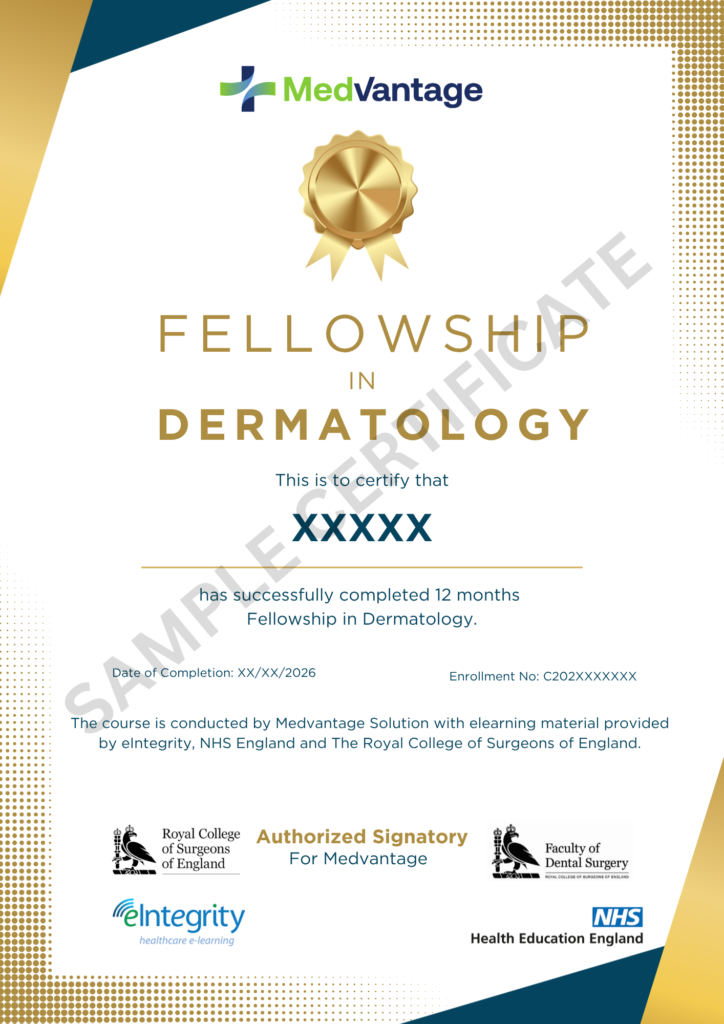
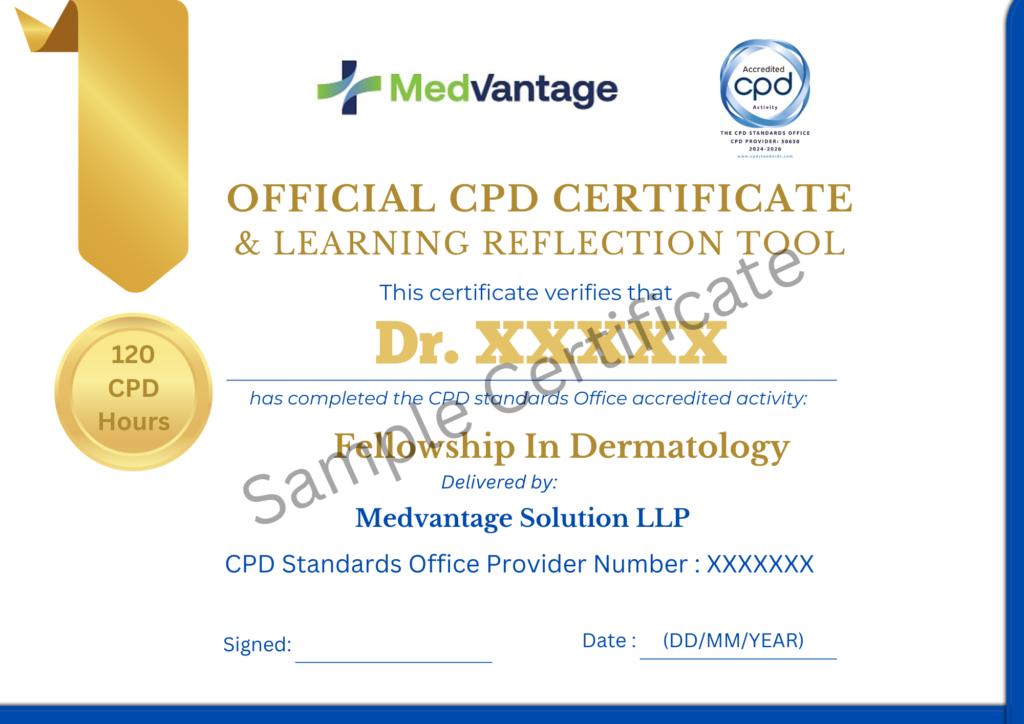
- Earn 120 CPD Points continuing medical education credits
- Digital certification with secure verification
- Share your achievement directly on LinkedIn and other platforms
- Certificate issued by MedVantage Education and recognized industry partners